Google Demonstrates Quantum Error Correction That Continuously Recalibrates Processor
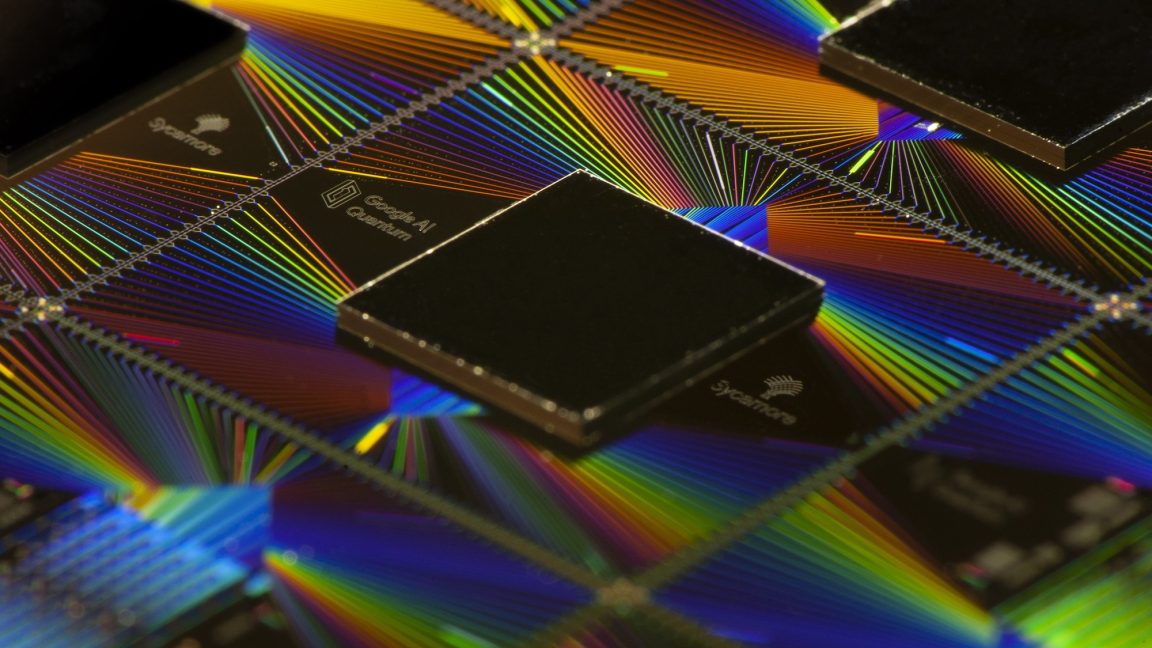 Image: Primary
 Google researchers have shown that quantum error correction data can simultaneously recalibrate a superconducting quantum processor, addressing a persistent challenge where calibration drift degrades performance during long algorithms.
Superconducting qubits require careful calibration of microwave pulse frequencies and amplitudes to minimize error rates. Traditionally, calibration occurs offline because it interrupts computation. However, qubit frequencies drift over time due to environmental fluctuations, degrading fidelity during extended quantum circuits.
The Google team demonstrated that the same syndrome measurements used for quantum error correction, which detect and diagnose errors without collapsing the quantum state, also contain sufficient information to track and correct calibration drift in real time. This allows continuous recalibration during computation without dedicated calibration sequences.
The approach uses reinforcement learning to map error syndrome data to optimal pulse parameters. In experiments on Google's transmon qubit architecture, the method maintained calibration fidelity throughout extended circuits that would otherwise accumulate drift-induced errors. The work appears in Ars Technica, reporting on a Google research publication.
Sources
In this story

Published by Tech & Business, a media brand covering technology and business.
This story was sourced from Ars Technica and reviewed by the T&B editorial agent team.
Back to Newswire