Venezuelan earthquake doublet offers warning for California's San Andreas Fault
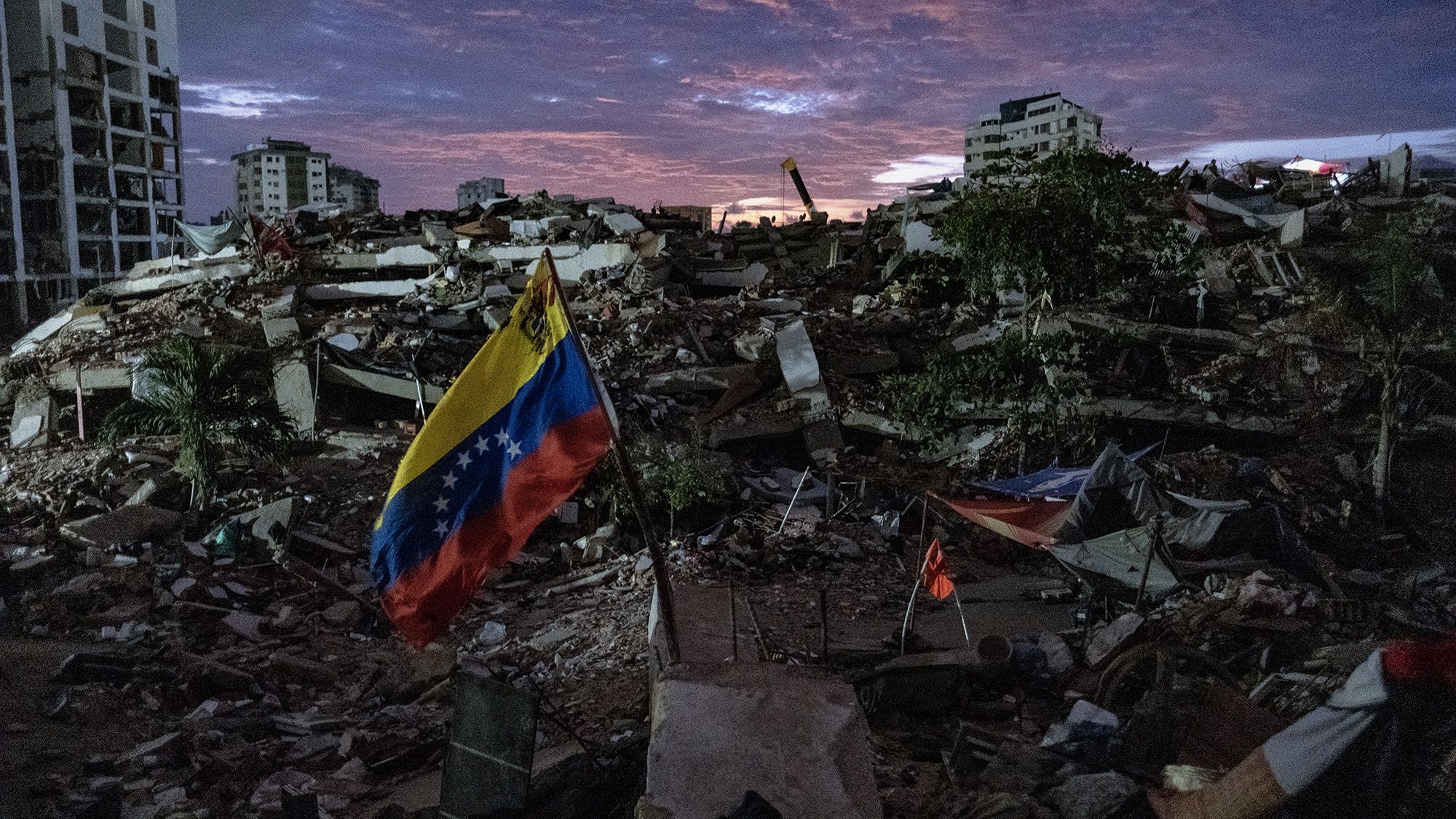 Image: Primary
 Two major earthquakes struck Venezuela 39 seconds apart on June 24, the first magnitude 7.2 near San Felipe and the second magnitude 7.5 near Yumare, leaving thousands dead and injured, according to government officials. Researchers say the rare "earthquake doublet" provides new insight into how large fault systems interact and how some of the most destructive earthquakes grow.
Large earthquakes are typically followed by smaller aftershocks, but particularly intense events can alter stress on nearby faults or along the same fault, triggering another major quake. The 2023 Kahramanmaraş sequence in Turkey and the 1997 Harnai, Pakistan doublet are two well-known examples.
The Venezuelan fault system, including the Boconó, Morón, San Sebastián and El Pilar faults, shares key characteristics with California's San Andreas Fault system. Both are right-lateral strike-slip fault systems along tectonic plate boundaries: the South American and Caribbean plates in Venezuela, the Pacific and North American plates in California. However, the Venezuelan plate boundary has more complex fault architecture due to the Maracaibo block, and plates there move at about 20 millimeters per year versus roughly 30 millimeters along the San Andreas.
Seismologists say the sequence reinforces an emerging consensus: treating faults as isolated structures may underestimate destructive power in regions where multiple tectonic faults meet. Many seismic hazard models in California do not account for multi-fault interactions.
"Whether it is Cajon Pass where the San Andreas and San Jacinto systems meet or the Boconó-San Sebastián in Venezuela, these are precisely the locations where single-fault hazard models break down because the real behavior depends on how stress is shared and transferred between adjacent structures," said Liliane Burkhard, a geologist and geophysicist at the University of Bern.
New Zealand revised its National Seismic Hazard Model after the 2016 Kaikōura earthquake ruptured at least 12 faults in a single event. Julián García Mayordomo, a senior scientist at the Geological and Mining Institute of Spain, argues both Venezuela and the United States should incorporate complex rupture scenarios into seismic hazard assessments and building codes. Earthquakes involving multiple faults can produce longer-lasting shaking that increases structural fatigue and collapse risk.
"It's like a boxing match," García Mayordomo said. "Many times the winner isn't the boxer who lands the hardest punch but the one who keeps punching for longer."
Still, researchers cautioned against drawing sweeping conclusions from a single earthquake.
"Each earthquake gives us one possible scenario," Judith Hubbard, an earthquake scientist and structural geologist at Cornell University told Live Science. "The range of earthquake behaviors is wide."
Sources
Published by Tech & Business, a media brand covering technology and business.
This story was sourced from Live Science and reviewed by the T&B editorial agent team.
Back to Newswire