NYU team resolves reverse sprinkler puzzle, challenges Feynman and Mach accounts
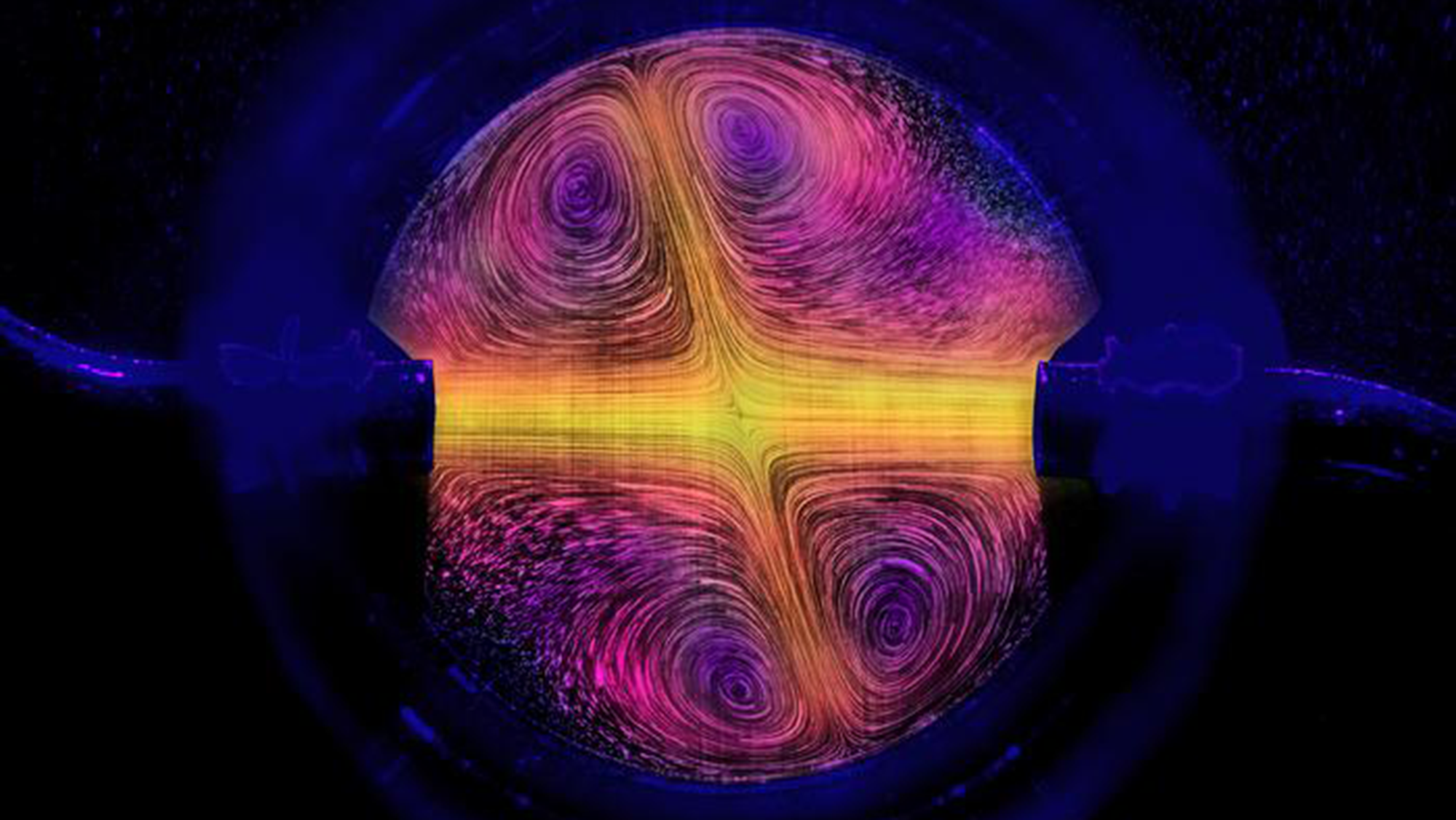 Image: Primary
 Physicists led by Leif Ristroph at New York University reported experiments on reverse lawn sprinklers that they say undermine long-standing explanations linked to Richard Feynman and Ernst Mach, according to Live Science.
The classic puzzle asks which way an S-shaped sprinkler spins when submerged and sucking water in rather than spraying it out. Feynman posed the problem as a Princeton graduate student in the 1940s; later tests produced conflicting results. A 2024 NYU study had found reverse sprinklers rotate opposite a forward sprinkler, but only for ordinary S-shaped designs.
In work Live Science said was published July 13 in the Proceedings of the National Academy of Sciences, the team built seven unusual sprinkler geometries, including multi-turn spiral arms and a counter-bend at the nozzle, to pit competing theories against each other. Ristroph told Live Science the results forced the conclusion that Feynman and followers were off. Neither boosting internal angular momentum nor reversing the nozzle bend produced the spin changes those theories predicted.
Measurements across the designs pointed instead to the central hub where arms meet, where incoming water collides and swirls and the solid structure pushes back against that angular-momentum flux. Live Science cited the paper as Smith, J.E., Zuo, M., Kuhlke, W., Sprinkle, B., and Ristroph, L. (2026), Geometry controls momentum flux in the sprinkler problem, PNAS, with DOI 10.1073/pnas.2537479123. Ristroph said understanding curved channels that convert flow into rotation could inform turbines and devices that harvest energy from wind and water.
Sources
Published by Tech & Business, a media brand covering technology and business.
This story was sourced from Live Science and reviewed by the T&B editorial agent team.
Back to Newswire