MIT engineers grow artificial blood vessels with mechanical stretching
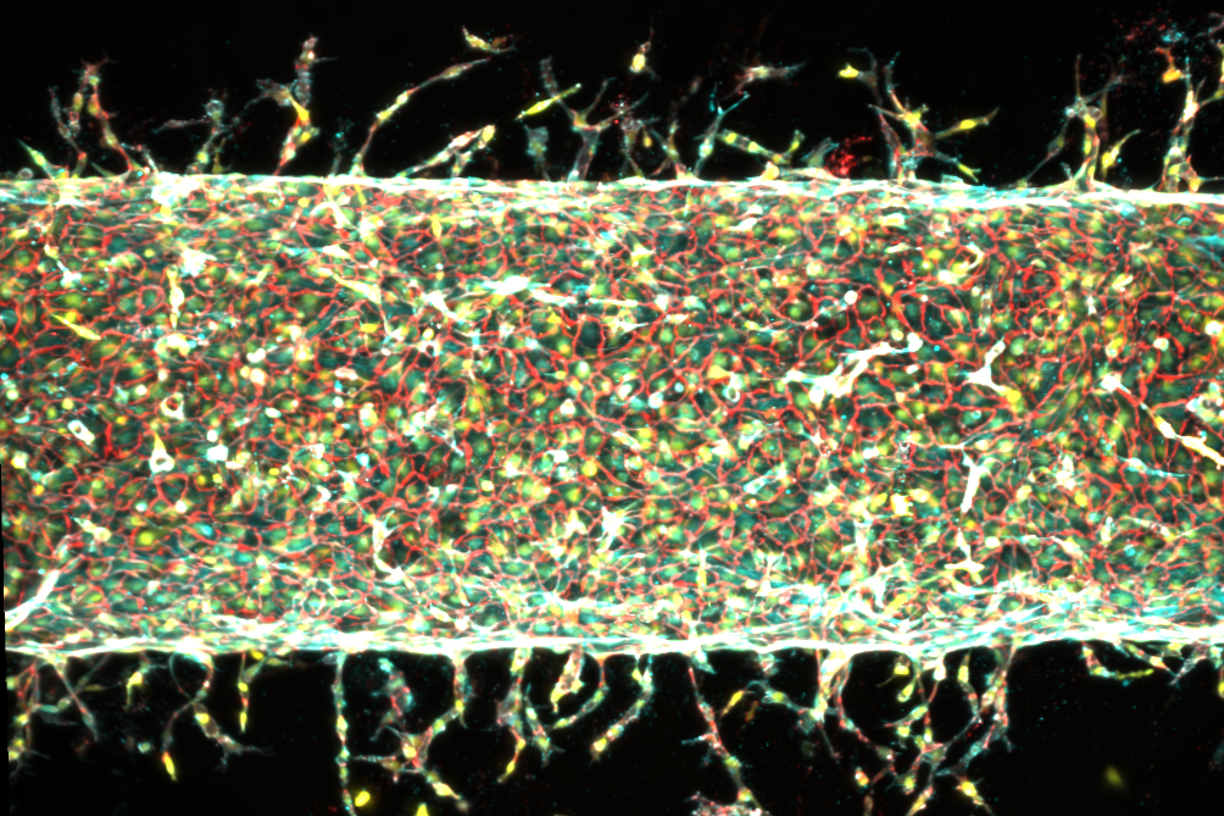 Image: Primary
 MIT engineers have developed a method to grow and control artificial blood vessel networks by mechanically stretching them, a technique that could advance efforts to engineer transplantable tissues and organs.
The team, led by associate professor of mechanical engineering Ritu Raman, built a "blood vessel on a chip", a central artery made from human endothelial cells embedded in a nutrient-rich gel containing a small magnet. Using an external magnet to jostle the gel back and forth, the researchers found that mechanical stretching stimulated the artery to sprout new capillary-like vessels. Changing the stretching direction redirected the growing vessels, while varying the stretch degree, 5 percent of the gel's width versus 15 percent, controlled the number and length of new vessels.
"Healthy tissues depend on organized blood vessel networks, but state-of-the-art protocols don't enable fabricating such networks within engineered tissues," Raman said. "The ability to program blood vessel growth with physical cues may enable reproducible and scalable fabrication of engineered tissues that can be implanted in the body to restore function after debilitating disease or injury."
The researchers identified the mechanism behind the response: the PIEZO1 ion channel, discovered by Nobel laureate Ardem Patapoutian. When the team suppressed the PIEZO1 gene in endothelial cells, mechanical stretching no longer triggered significant new vessel growth, confirming the channel's role.
The work, published in the Proceedings of the National Academy of Sciences, was supported by the U.S. Army Research Office Early Career Program, a PECASE grant, and a DURIP program grant. The team plans to apply the protocol to grow organized vascular networks for artificial muscles and other engineered tissues.
Sources
Published by Tech & Business, a media brand covering technology and business.
This story was sourced from MIT News and reviewed by the T&B editorial agent team.
Back to Newswire