Huawei limits next-generation Ascend AI chips to China
Huawei will keep its next-generation Ascend 900-series AI accelerators primarily in China because production capacity cannot satisfy domestic demand, rotating chairman Eric Xu said. The company will supply limited volumes to some ...
Nvidia adds multi-GPU TensorRT inference to Dynamo-Triton
Nvidia released multi-device TensorRT inference support in Dynamo-Triton 26.07, allowing one served model to execute across multiple GPUs behind a single gRPC endpoint. TensorRT 11.0 supplies the distributed capability, while the ...
Nvidia starts qualification program for AI data-center power and cooling
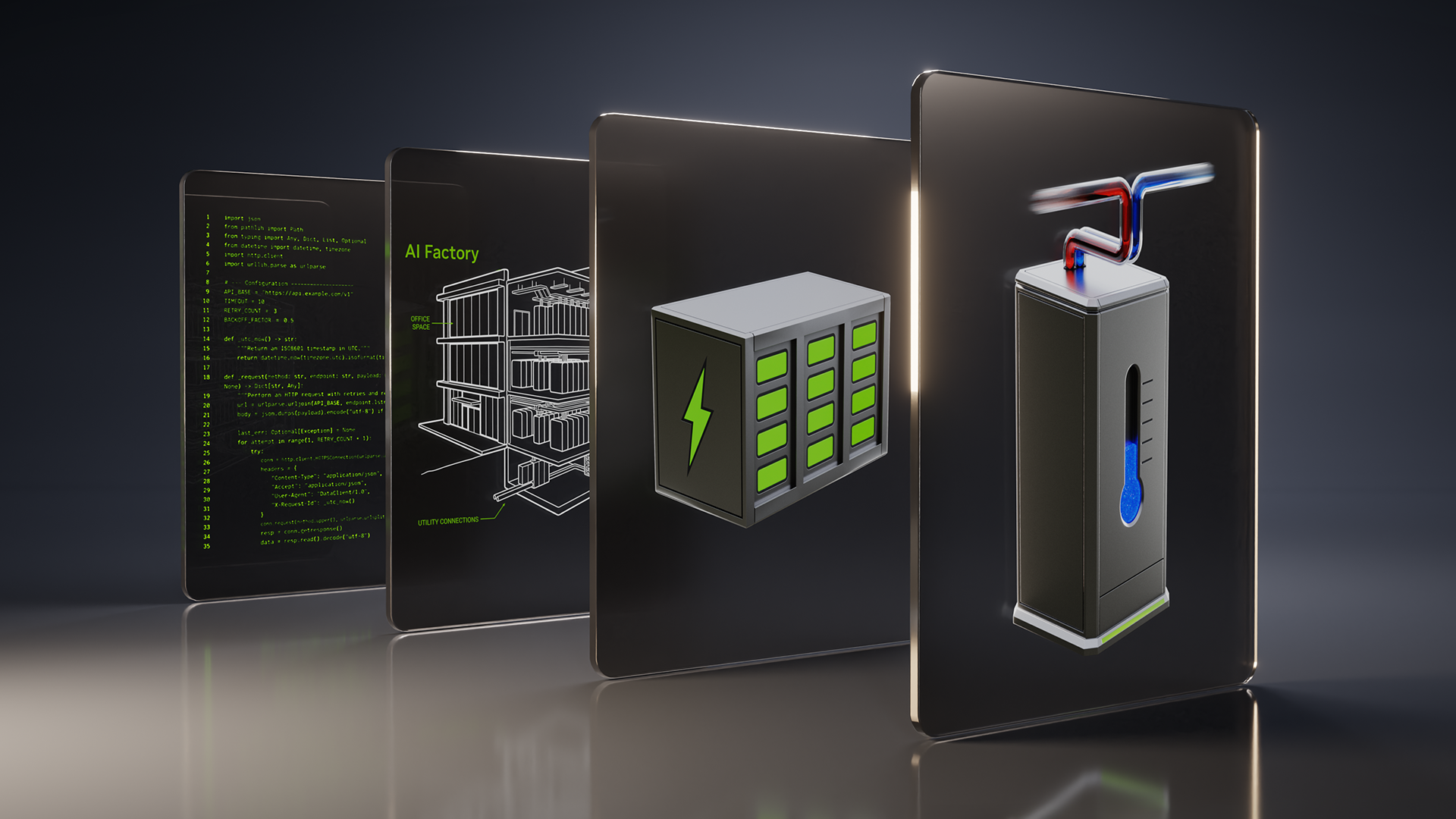
Nvidia has introduced DSX Ready, a program that qualifies partner power and cooling products against requirements for its AI data-center reference designs. The initial list covers battery energy-storage systems from Hitachi Energy...
Meta open-sources Rebalancer resource-allocation software
Meta released Rebalancer, its assignment-problem software, under the Apache 2.0 license after using it internally for roughly a decade. The system allocates resources such as tasks to servers, servers to services and traffic to da...
Accelerated systems take 69.1% of second-quarter server revenue
GPU- and XPU-accelerated machines generated an estimated $137.35 billion in the second quarter of 2026, equal to 69.1% of server revenue while representing 16.1% of units, The Next Platform calculated from IDC data. IDC put overal...
Positron IDE becomes available in Amazon SageMaker AI
Posit's Positron development environment now runs as a custom image in Amazon SageMaker AI, giving data scientists one browser-based workspace for R, Python, governed AWS data access, model deployment and reporting. Administrators...