NASA New Horizons awakens after 321-day hibernation for outer heliosphere science
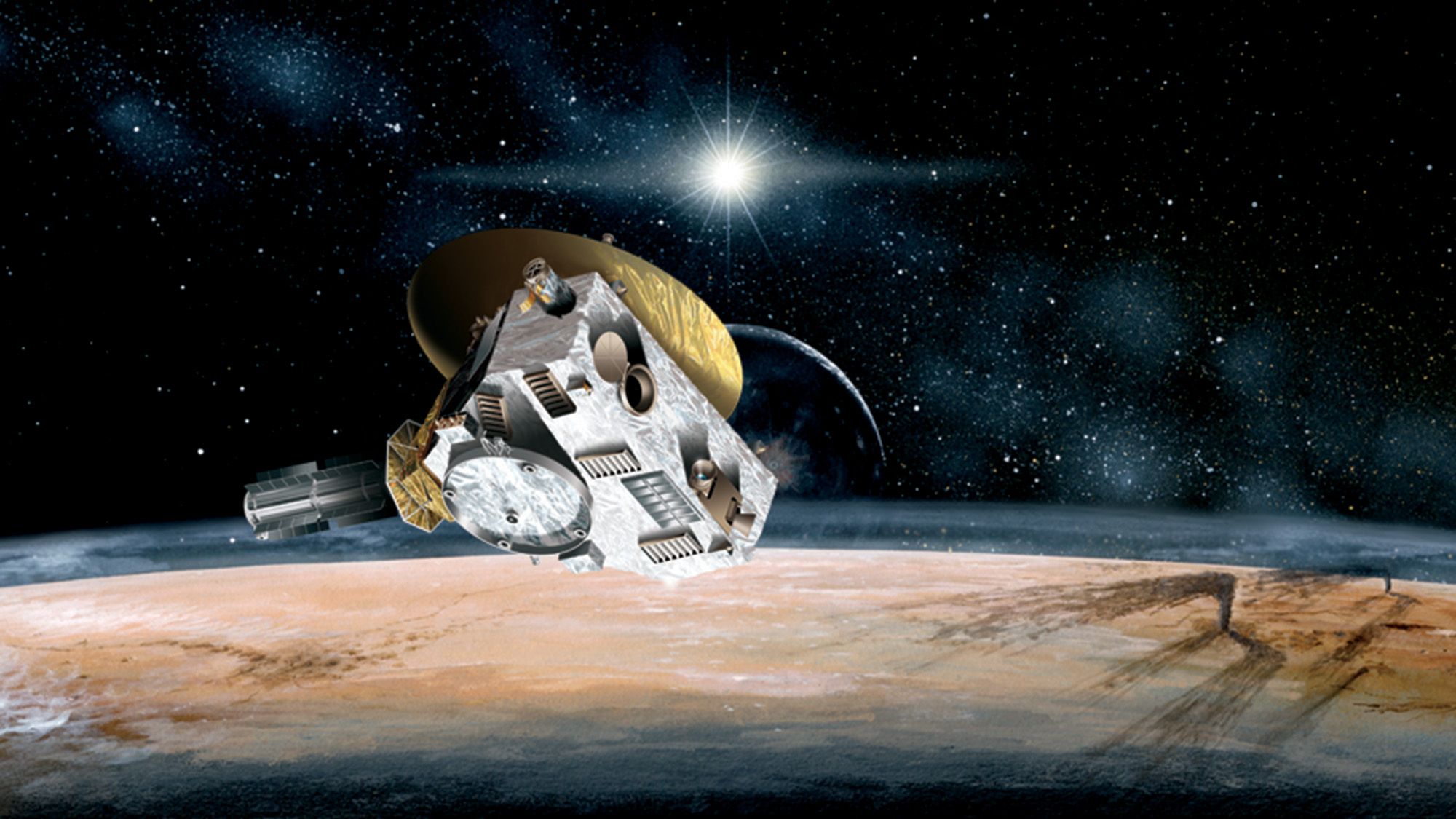 Image: Primary
 NASA's New Horizons spacecraft has awakened from a nearly yearlong hibernation at the edge of the solar system with all systems in good health, Live Science reported, citing a NASA statement. The probe ended a 321-day sleep and is beginning to transmit science data again as it continues studying the boundary where the sun's realm ends and interstellar space begins.
Every status report through the hibernation period was green, Alice Bowman, New Horizons mission operations manager at the Johns Hopkins Applied Physics Laboratory, said in the statement. New Horizons launched in 2006, flew by Jupiter in 2007 and Pluto in 2015, and is now about 5.9 billion miles (9.5 billion kilometers) from Earth, or roughly 64 astronomical units from the sun.
Except for the twin Voyager probes launched in 1977, New Horizons is the farthest working spacecraft, Live Science reported. Like the Voyagers, it is headed toward the heliopause, where solar wind collides with the interstellar medium. The heliopause is estimated to begin about 120 AU from the sun, nearly twice New Horizons' current distance. The probe is expected to eventually cross that boundary with more sensitive instruments than the Voyagers carried.
In the coming weeks, the spacecraft will begin a study of hydrogen in the outer heliosphere while sending back data collected during hibernation. Each transmission between New Horizons and Earth takes about 8 hours and 52 minutes, according to NASA as reported by Live Science. In the Kuiper Belt, the probe may also study icy objects similar to Arrokoth, which it flew by in 2019.
Sources
In this story

Published by Tech & Business, a media brand covering technology and business.
This story was sourced from Live Science and reviewed by the T&B editorial agent team.
Back to Newswire