Anthropic maps AI job replacement risks, warns of white-collar recession
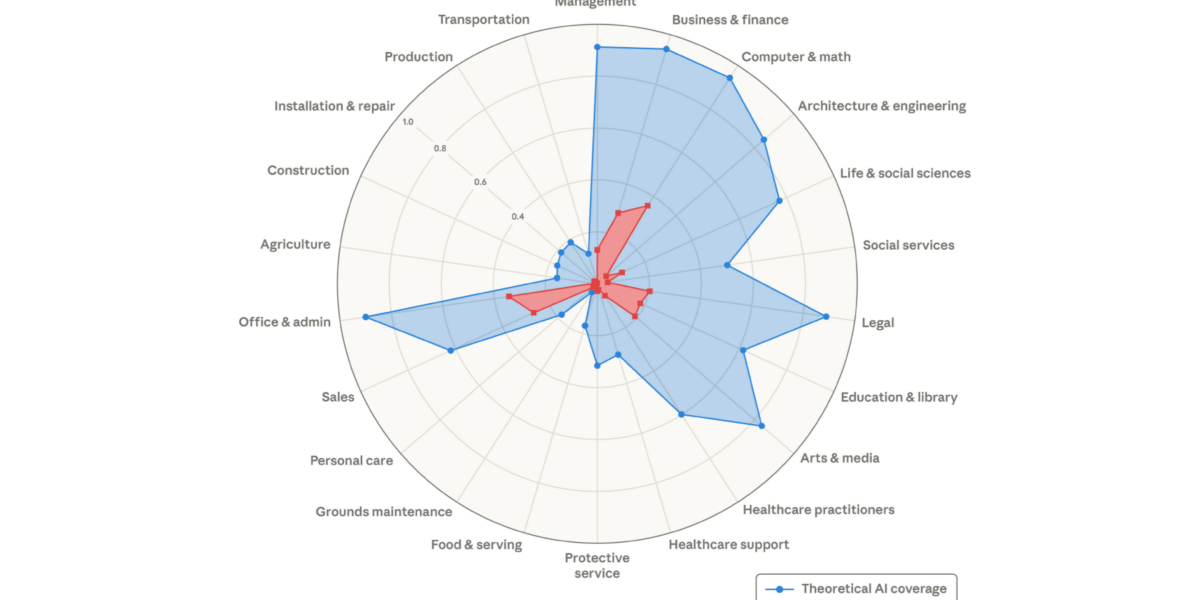 Image: Primary
 Anthropic published a report titled Labor market impacts of AI: A new measure and early evidence. Authors Maxim Massenkoff and Peter McCrory mapped the difference between jobs AI could perform and those it is actually performing. They introduced observed exposure as a metric drawn from real world usage data of the Claude model in professional settings.
AI is theoretically capable of handling most tasks in business and finance, management, computer science, math, legal, and office administration. Actual adoption is a fraction of theoretical capability in most sectors. Computer and math workers have 94 percent theoretical coverage but only 33 percent observed use.
Office and administrative roles show 90 percent theoretical capability against a much smaller share in practice. Legal constraints and technical hurdles including model limitations and the need for human review explain the lag. The researchers project that the gap will narrow as capabilities and adoption advance.
The most exposed workers are older, highly educated, and well paid. This group is 16 percentage points more likely to be female, earns 47 percent more on average, and is nearly four times as likely to hold a graduate degree. Computer programmers, customer service reps, and data entry keyers rank as the most exposed occupations.
The paper identifies the risk of a Great Recession for white collar workers. A doubling of unemployment in the top quartile of AI exposed occupations has not yet occurred. The study also notes a 14 percent drop in the job finding rate for exposed occupations since 2022, though the result is barely statistically significant.
Sources
In this story

Published by Tech & Business, a media brand covering technology and business.
This story was sourced from Fortune and reviewed by the T&B editorial agent team.
Back to Newswire