Warwick-led VLT study finds black hole outflows persist long after X-ray peaks fade
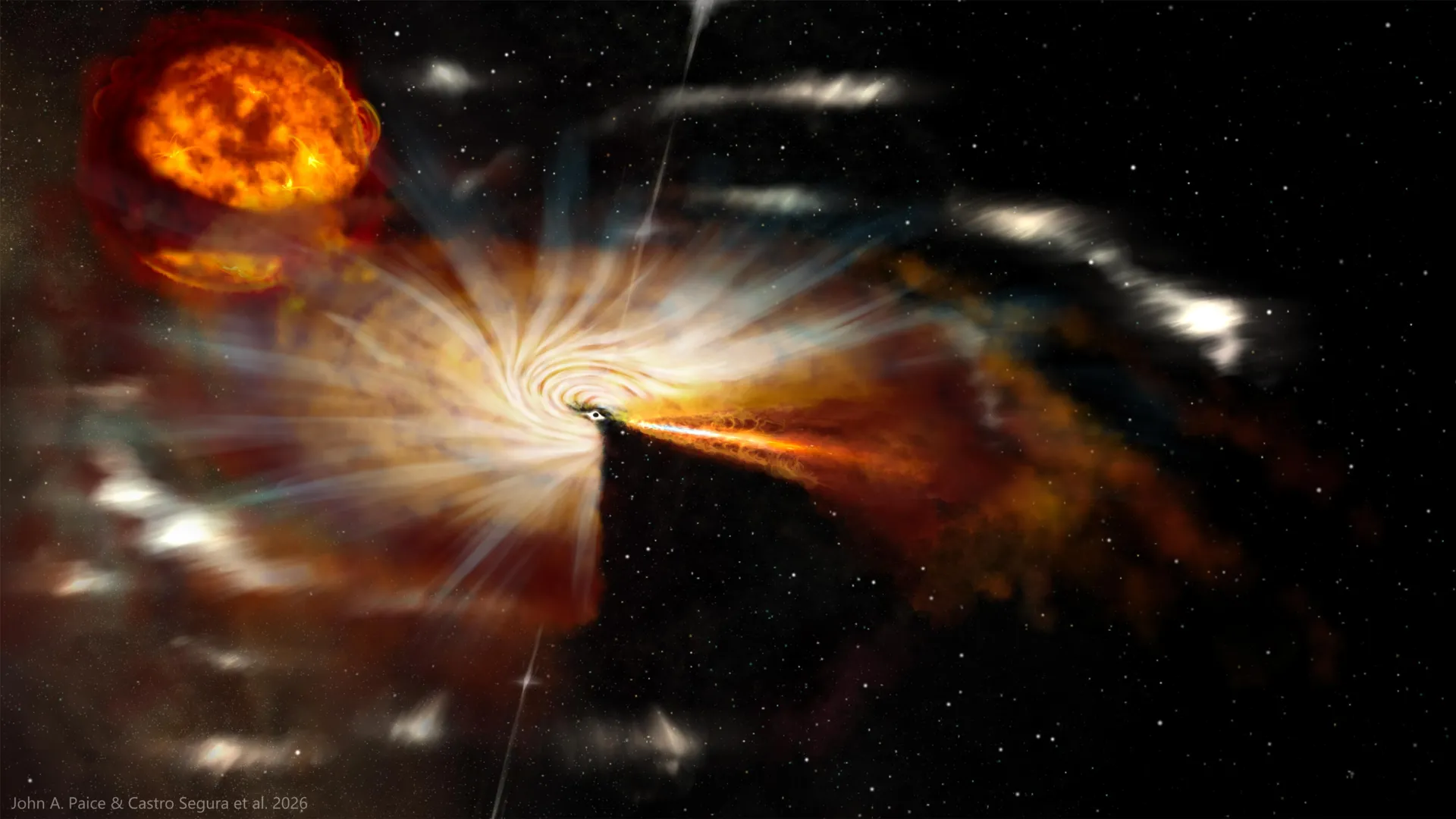 Image: Primary
 Observations led by University of Warwick postdoctoral fellow Noel Castro Segura tracked black hole system Swift J1727.8−1613 through a 2023 outburst with ESO's Very Large Telescope and found strong jets and winds that can continue even when the source is extremely faint, ScienceDaily reported from University of Warwick materials.
As the black hole drew gas from a companion star, it also expelled material. Dense outflows were still detected when the system had dimmed to roughly one hundredth of peak activity, implying expelled mass could be comparable to what the black hole ultimately swallows.
Castro Segura said matter falls in, the system processes it, and a surprising amount is expelled again. The campaign produced a detailed optical record across multiple activity stages, including a powerful jet launch tied to major changes in the accretion disc.
Doctoral researcher Kyle Solomons of the University of Cape Town said the finale can be as intense as the initial fireworks. The team argued black holes may be less efficient eaters than assumed, reshaping how binary-star evolution is modeled.
Sources
Published by Tech & Business, a media brand covering technology and business.
This story was sourced from ScienceDaily and reviewed by the T&B editorial agent team.
Back to Newswire


