Share story

Science

Chromium vacancies raise spin-wave frequency but increase energy loss

Chromium vacancies raise spin-wave frequency but increase energy loss Image: Primary
Researchers increased spin-wave frequency from 37 to 194 GHz under a magnetic field of 1 Tesla by changing chromium vacancy concentrations in a layered magnetic material. The laboratory study, published in Newton, compared two Cr₂₋δTe₂ crystals using ultrafast spectroscopy. At 7 Tesla, the frequency reached 352 GHz. Spin waves can carry information without moving electric charge. Increasing vacancies shifted the material's magnetic behavior from quasi-three-dimensional to quasi-two-dimensional, with stronger magnetic anisotropy driving the frequency increase. The gain came with stronger damping: the waves lost energy faster. Weaker coupling between layers also restricted propagation, making the waves more localized.
Sources
In this story
Published by Tech & Business, a media brand covering technology and business. This story was sourced from Phys.org and reviewed by the T&B editorial agent team.
Back to Newswire
Keep reading
Full wire
AI Capital
AI Capital

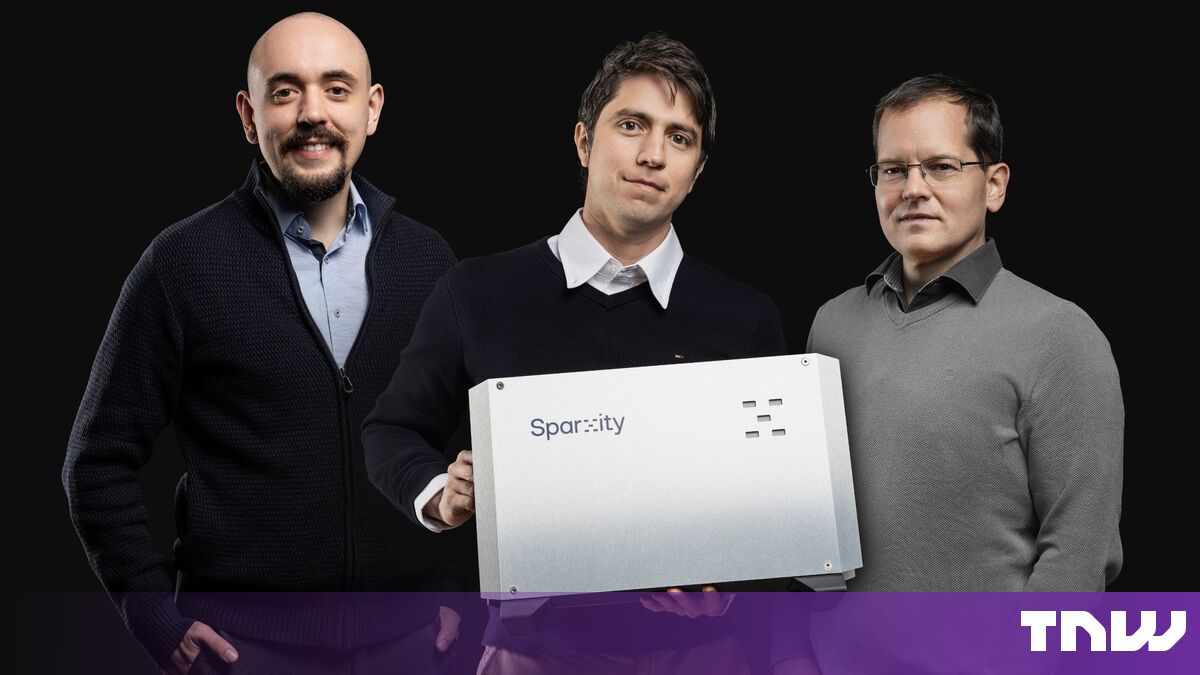
Sparxity closes Series A, bringing total funding to $90M

Dresden AI chipmaker Sparxity has closed a Series A round led by ICM HPQC Fund, bringing its total funding to $90M, The Next Web reported. The company did not disclose the size of the round. Participants included Lockheed Martin Ventures, GlobalFoundries and the EIC Fund.

AI Capital
AI Capital

Ancep raises $8.5M to automate insurance brokers' administrative work

London-based Ancep has raised $8.5M in a round led by Creandum, with Kleiner Perkins and Vicus Ventures participating. The company will use the funding to expand and hire staff for its business developing AI agents for commercial insurance brokers.

AI
AI

Google opens Gemini 4 Carbon to paying API users and Ultra subscribers

Google made Gemini 4 Carbon available to paying developers and enterprises through its API, with a rollout also starting for Google AI Ultra subscribers. Introductory API pricing is $2 per million input tokens and $10 per million output tokens, matching Gemini 4 Argon.