NVIDIA open-sources GPU-accelerated medical physics simulation for healthcare robots
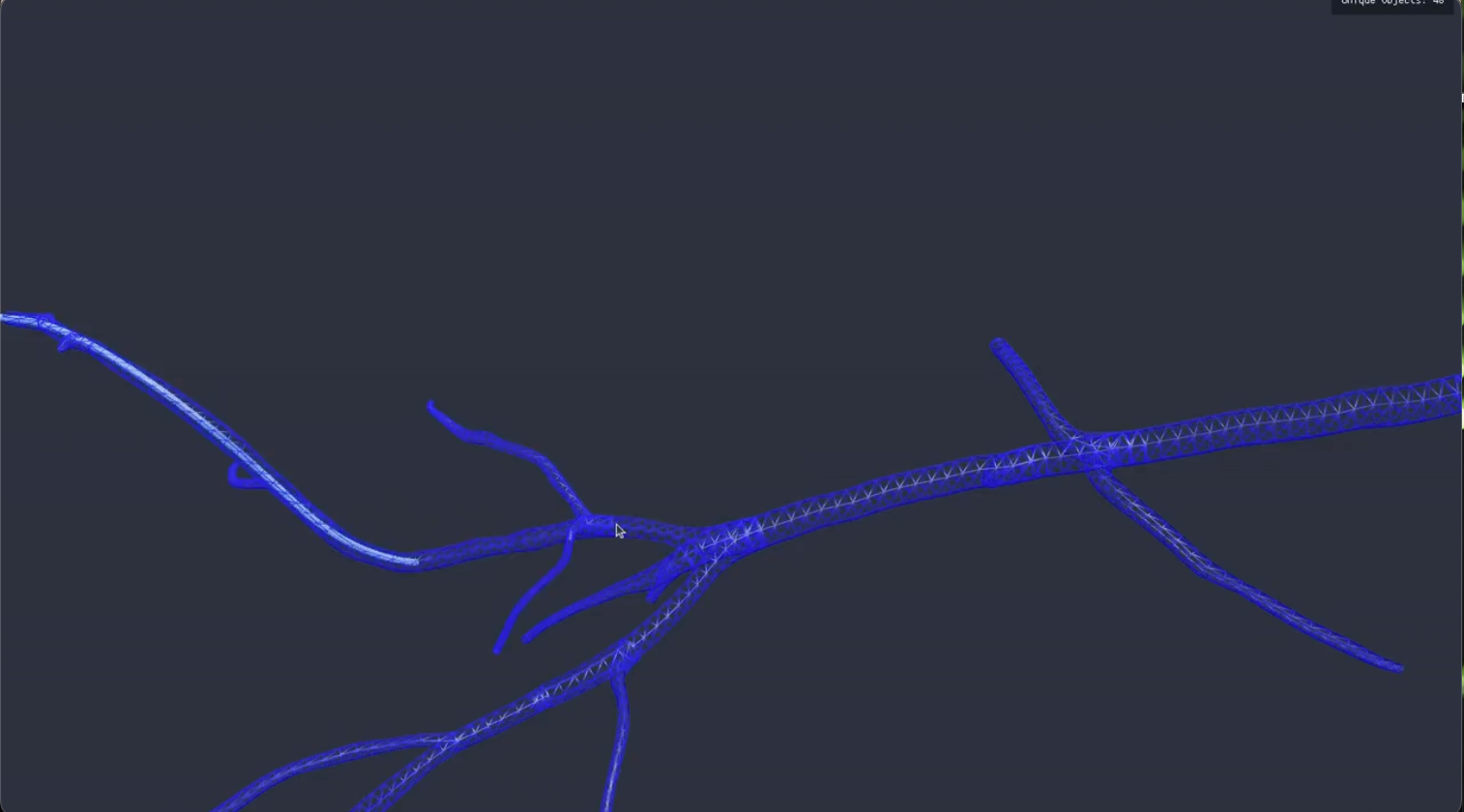 Image: Primary
 NVIDIA announced an open-source, GPU-accelerated Medical Physics Simulation framework inside NVIDIA Isaac for Healthcare, aimed at helping medical robotics developers model anatomy-device interaction, generate hard-to-capture scenarios, test in silico, and train or evaluate robot policies before heavy hardware testing.
The company said the framework combines anatomy and medical device behavior with sensor simulation and robot learning so teams can build reusable simulation environments instead of custom scenes for every workflow. Because it is open source, developers can inspect the framework, adapt it to their devices, and work with a GPU-accelerated foundation that fits the broader NVIDIA stack. NVIDIA argued open models and weights matter in healthcare for reproducibility, limitation analysis, and regulatory evidence.
Powered by NVIDIA CUDA and built on NVIDIA Warp, Newton, and Cosmos simulation and generative AI technologies, the framework can run hundreds of parallel simulation environments. NVIDIA said benchmarks show 8,192 robot-training environments running in parallel with GPU-native simulation cut training from over five hours to under two minutes. Developers can connect vascular anatomy, flexible instruments such as catheters and guidewires, simulated X-ray imaging, and reinforcement learning, with the design intended to extend to more devices, anatomies, sensors, and domains.
Classical physics simulation models known rules such as contact, friction, and motion, while NVIDIA Cosmos-H Dreams provides real-time generative AI physics simulation of visual scene dynamics learned from procedural data. As a modular Isaac for Healthcare capability, it can be used alone or with digital twin pipelines, medical sensor simulation, Isaac Lab, and NVIDIA open models and policies.
Medical robotics groups are already applying the stack. CMR Surgical and Cambridge Consultants, part of Capgemini, are using Cosmos-H-Dreams for soft-tissue surgical interaction physics, and CMR contributed nearly 500 hours of anonymized Versius clinical data to the Open-H Embodiment open dataset. Johnson & Johnson MedTech is building digital twins of its endoluminal MONARCH urology platform. XCath is training endovascular autonomy policies with the framework, while Inner Logic and Medtronic Structural Heart are exploring related synthetic data and catheter navigation research.
Sources
In this story

Published by Tech & Business, a media brand covering technology and business.
This story was sourced from NVIDIA Blog and reviewed by the T&B editorial agent team.
Back to Newswire