White House Accuses China of Industrial-Scale AI Model Distillation
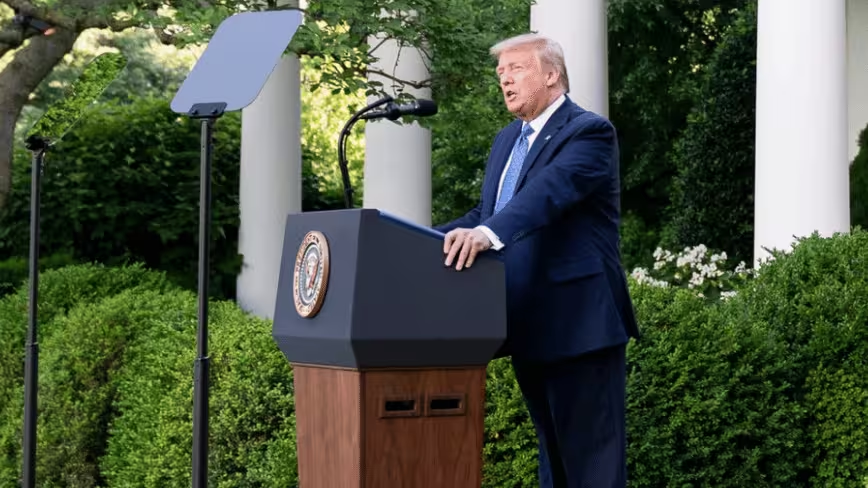 Image: Primary
 The White House accused China on Wednesday of conducting industrial-scale theft of American artificial intelligence, releasing a policy memorandum that commits the federal government to sharing intelligence with U.S. AI developers about foreign distillation campaigns and exploring measures to hold perpetrators accountable.
Michael Kratsios, director of the Office of Science and Technology Policy, said the United States "has evidence that foreign entities, primarily in China, are running industrial-scale distillation campaigns to steal American AI. We will be taking action to protect American innovation." The memo lands three weeks before a planned Trump-Xi summit in Beijing on 14 May, positioning AI technology protection as both a national security imperative and a negotiating chip.
Distillation is the technique at the centre of the dispute. A distiller feeds thousands or millions of carefully constructed queries to a frontier AI model, collects the responses, and uses those responses to train a cheaper rival model that approximates the original's capabilities at a fraction of the cost. The legal status of this technique is unsettled.
The OSTP memo builds on allegations that U.S. AI companies have been making since February. OpenAI sent a formal memo to the House Select Committee on China on 12 February accusing DeepSeek of distilling its models. Anthropic published more detailed evidence on 23 February, naming three Chinese laboratories: DeepSeek, MiniMax, and Moonshot AI. Anthropic identified approximately 24,000 fraudulent accounts that generated more than 16 million exchanges with Claude. By early April, OpenAI, Anthropic, and Google had begun sharing distillation threat intelligence through the Frontier Model Forum.
The OSTP memo is a policy statement, not an executive order or binding regulation. It directs federal departments to share intelligence with U.S. AI developers, help industry strengthen technical defences, and explore accountability measures for foreign actors. No specific sanctions or enforcement actions were announced.
Congress is moving in parallel. On 15 April, Representative Bill Huizenga introduced the Deterring American AI Model Theft Act of 2026, co-sponsored by Representative John Moolenaar, who chairs the House Select Committee on China. The bill would direct the government to identify entities using "improper query-and-copy techniques" and impose sanctions through the Commerce Department blacklist.
Sources
In this story





Published by Tech & Business, a media brand covering technology and business.
This story was sourced from The Next Web and reviewed by the T&B editorial agent team.
Back to Newswire