Share story

Science

Engineered marine bacteria accelerated olivine weathering in bioreactors

Engineered marine bacteria accelerated olivine weathering in bioreactors Image: Primary
Researchers at Harvard and Stanford engineered the marine bacterium Alteromonas macleodii to keep producing siderophores, molecules that remove iron from silicate-mineral surfaces. In continuous-flow seawater bioreactors, the team reported a 2.6-fold increase in olivine weathering and higher carbon-dioxide removal. Pilot-scale reactors containing several kilograms of olivine sand reportedly captured 0.5 grams of atmospheric CO2 per day. The results were published in Nature Biotechnology, but the researchers say further scale-up work is needed to identify economical feedstocks and minerals.
Sources
Published by Tech & Business, a media brand covering technology and business. This story was sourced from Phys.org and reviewed by the T&B editorial agent team.
Back to Newswire

Keep reading
Full wire
Products Security
Products Security

IonQ agrees to acquire Elisity for up to $1.3 billion in stock

Quantum computing firm IonQ has agreed to acquire Elisity for as much as $1.3 billion in an all-stock transaction, Bloomberg reported. The deal is intended to expand IonQ's cybersecurity platform to address dangers assisted by art...

AI Capital
AI Capital

Suki raises $90 million to expand healthcare AI workflows

Suki raised a $90 million Series E led by Healthier Capital to scale its healthcare AI scribe business and add workflows in which AI takes actions, CEO Punit Soni told Axios. The company provides AI tools that document care for he...

Security Policy
Security Policy

UK expands AI vulnerability searches into closed government systems

The UK government will expand its use of frontier AI models to find vulnerabilities, moving the next phase into closed government systems. One pilot generated 407 findings across nine government organisations during a month of wee...

AI Infrastructure
AI Infrastructure

AWS launches Ray LLM containers for inference across GPU nodes

AWS has launched Ray LLM Deep Learning Containers for serving language models across multiple GPU nodes, extending its preassembled inference stack beyond single-node deployments. The containers bundle the inference engine, servin...

Infrastructure AI
Infrastructure AI

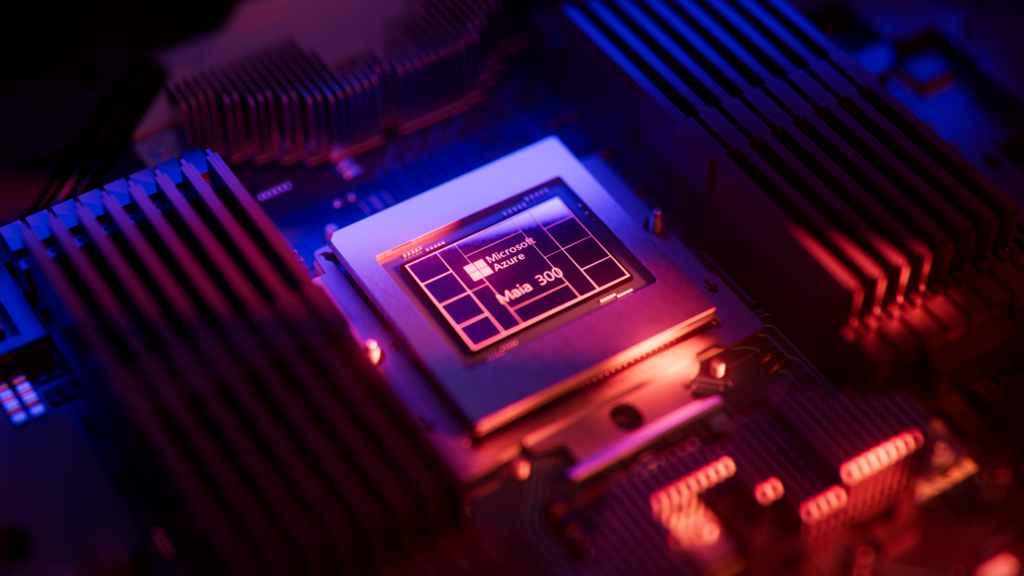
Microsoft details 96-chip Maia 300 racks and expanded inference network

Microsoft detailed a Maia 300 design that doubles accelerator density to 96 chips in a 167-kW rack and connects up to 12,288 accelerators through one network. The company says the full rack delivers up to 7 times Maia 200's token ...