Infrastructure

Blue Origin achieves booster reuse but faces upper-stage issue on New Glenn flight
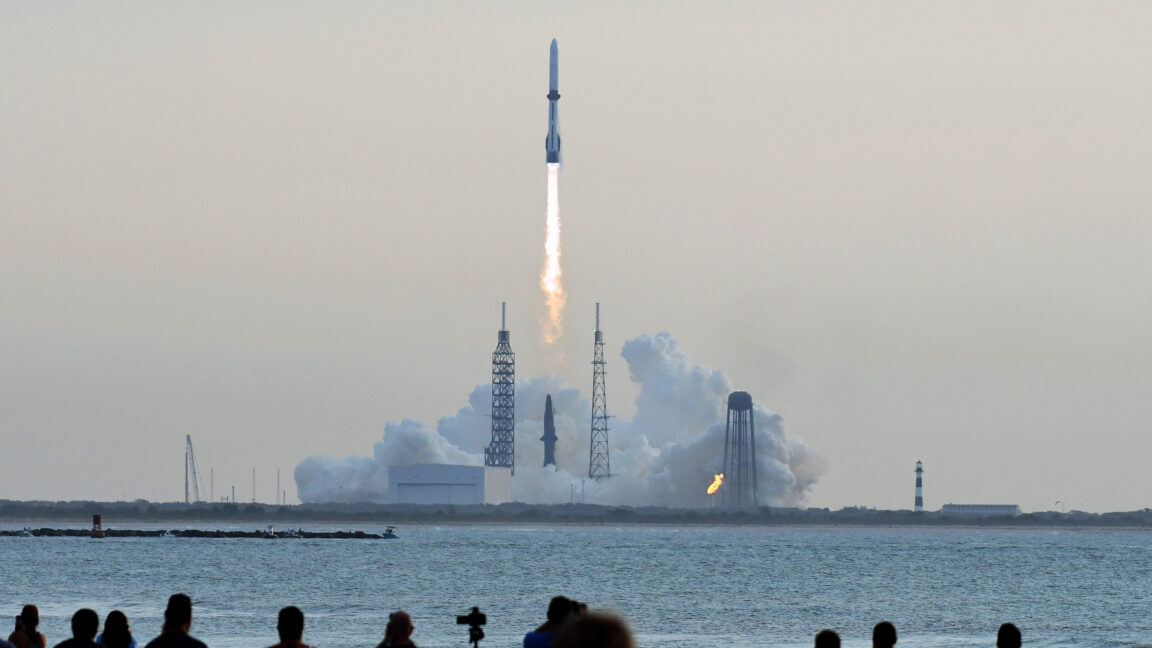
Blue Origin achieves booster reuse but faces upper-stage issue on New Glenn flight Image: Primary
Blue Origin achieved its first successful reflight of an orbital-class rocket booster on Sunday but encountered an upper-stage issue that compromised the mission's primary objective. The company's New Glenn heavy-lift launch vehicle lifted off from Cape Canaveral Space Force Station in Florida at 7:25 a.m. EDT. The 321-foot-tall rocket, powered by seven methane-fueled BE-4 engines, accelerated past the speed of sound within approximately 90 seconds. Approximately three minutes into flight, the first stage separated and began its return trajectory. The booster, named Never Tell Me The Odds, executed two braking burns before landing on a platform in the Atlantic Ocean about 400 miles southeast of the launch site. This marked the second flight for this particular booster, which previously launched and was recovered in November. Blue Origin has extensive experience reusing its smaller New Shepard suborbital vehicles, but New Glenn represents a significant advancement in scale and complexity. Despite the successful booster recovery, the mission experienced problems with the upper stage. The incident represents a setback for Blue Origin as it seeks to establish New Glenn as a competitor in the commercial launch market and a key component of NASA's Artemis lunar program. Company CEO Dave Limp stated that while new engines were installed for this flight, Blue Origin plans to reuse engines from the November launch on future missions. The company aims to increase launch frequency through booster reusability, following the precedent set by SpaceX with its Falcon 9 rocket.
Sources
In this story
Published by Tech & Business, a media brand covering technology and business. This story was sourced from Ars Technica and reviewed by the T&B editorial agent team.
Back to Newswire

Keep reading
Full wire
Security
Security

Google issues Chrome update for actively exploited V8 flaw

Google has released an emergency Chrome update for CVE-2026-85046, a high-severity type-confusion vulnerability in the browser's V8 JavaScript and WebAssembly engine, according to Cybersecurity News. The report says Google is awar...

Capital
Capital

Anthropic nears $15 billion revolver ahead of IPO filing

Anthropic is set to finalize an expansion of its revolving credit facility to $15 billion, according to people familiar with the matter cited by Bloomberg. Morgan Stanley is leading the process, with Goldman Sachs, JPMorgan Chase ...

Infrastructure
Infrastructure

Firmus commits $300 million for Australia-US cable capacity

Australian AI cloud firm Firmus will invest $300 million to secure up to 150Tbps of dedicated capacity for 25 years on SubCo's planned APX East submarine cable system. The 16-fiber-pair cable, first announced in January, is inten...

AI
AI

G42 explores majority US ownership to protect chip access

Abu Dhabi-based AI company G42 has held exploratory talks about potentially selling a majority stake to American companies, according to people familiar with the matter. The reported discussions are aimed at securing the company's...

Infrastructure
Infrastructure

Meta brings Kuna AI-optimized data center online

Meta's Kuna, Idaho, data center is now serving traffic, according to the company's data-center development vice president. The facility is Meta's second AI-optimized site to come online and represents an overall investment of $1.2...

Infrastructure Policy

Russia bans crypto mining in Moscow region through 2032

Russia's government has banned cryptocurrency mining and mining-pool participation in Moscow, the surrounding region and parts of Kursk through the end of 2032 under Government Decree No. 936. The measure is intended to reduce pre...