NASA Creates Bose-Einstein Condensates Aboard ISS with Upgraded Cold Atom Lab
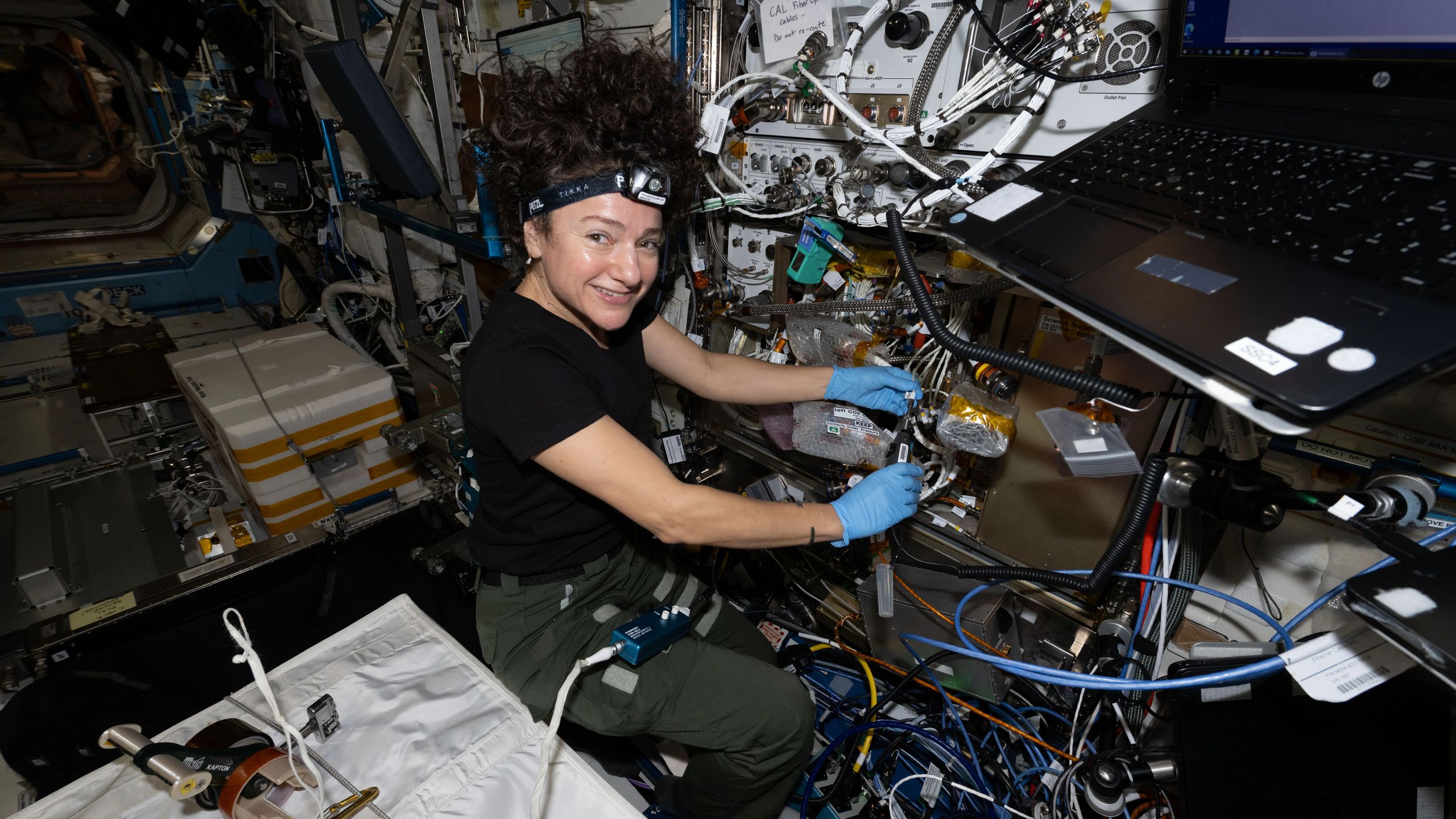 Image: Primary
 NASA has begun producing Bose-Einstein condensates, a fifth state of matter distinct from solids, liquids, gases, and plasmas, aboard the International Space Station using an upgraded Cold Atom Laboratory (CAL). The facility, roughly the size of a mini-fridge, was recently enhanced with new laser and magnetic trapping hardware that allows scientists to cool atoms to temperatures within a fraction of a degree above absolute zero in the station's microgravity environment.
At these ultracold temperatures, atoms lose nearly all thermal motion and their quantum wave-like nature dominates, allowing them to occupy the same quantum state and behave as a single coherent matter wave. On Earth, gravity causes these fragile condensates to collapse within milliseconds; in orbit, they can persist for seconds or longer, enabling precision measurements impossible on the ground.
The upgraded CAL will support experiments in quantum sensing, tests of fundamental physics including equivalence principle tests and searches for dark energy signatures, and demonstrations of space-based quantum clocks and interferometers. NASA's Jet Propulsion Laboratory manages the facility, which has been operating on the ISS since 2018. The new hardware was delivered on a recent resupply mission and commissioning is underway.
Sources
In this story

Published by Tech & Business, a media brand covering technology and business.
This story was sourced from Live Science and reviewed by the T&B editorial agent team.
Back to Newswire