Bacteria convert toxic uranium into a stable compound in mine water, study finds
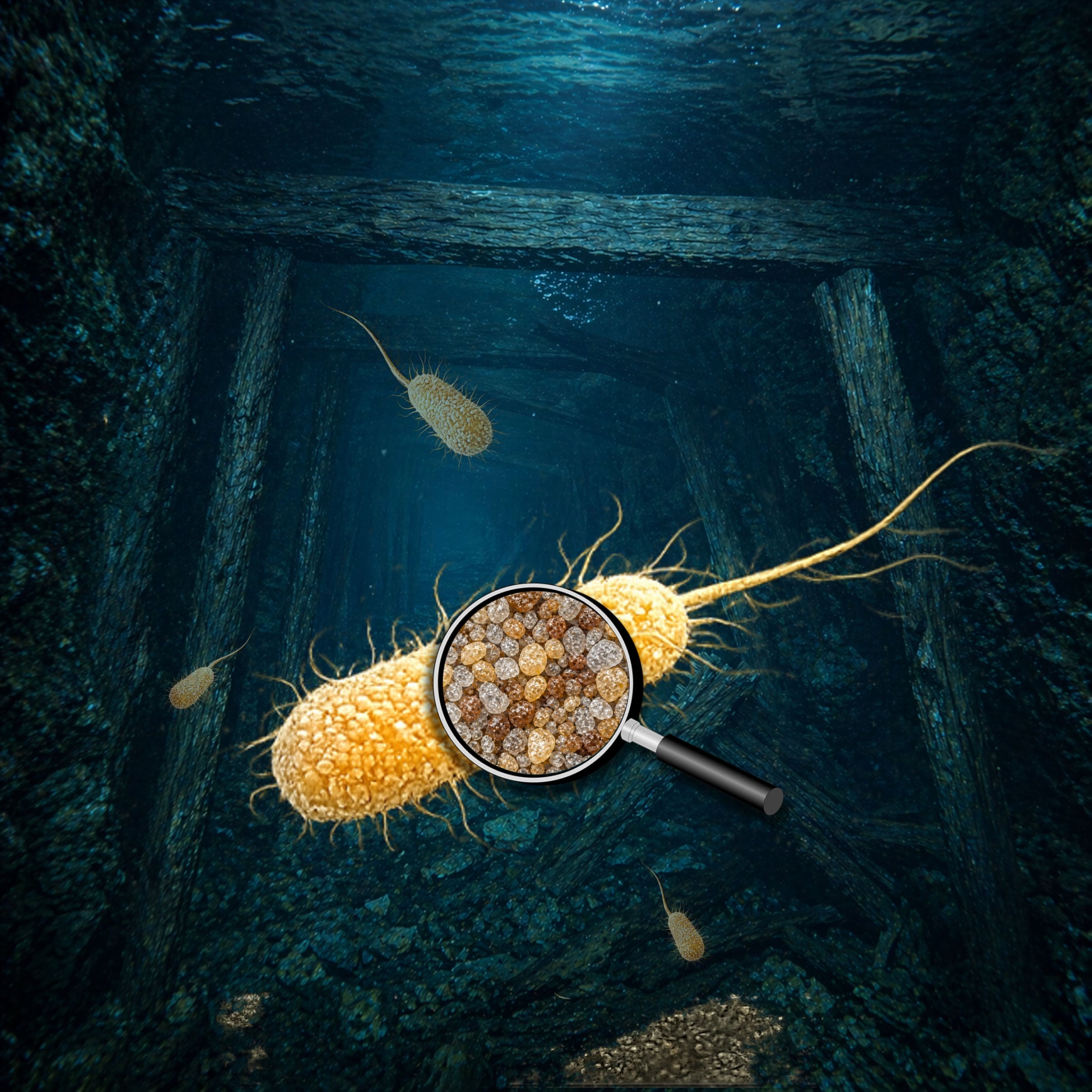 Image: Primary
 Naturally occurring bacteria in flooded uranium mines can convert dissolved uranium into a surprisingly stable compound, according to a study by scientists at the Helmholtz-Zentrum Dresden-Rossendorf (HZDR), Wismut GmbH, and the University of Granada published in Nature Communications. The finding could inform future bioremediation strategies for uranium-contaminated sites.
The researchers used water from a flooded uranium mine in the Ore Mountains operated by Wismut GmbH, which already contained a natural community of bacteria adapted to the environment. They added glycerol as a carbon source and kept samples under oxygen-free conditions to replicate the deep-mine environment at roughly 2,000 meters depth. After 130 days, only about five percent of the dissolved uranium remained in the water.
Analysis confirmed that uranium had accumulated in bacterial cell walls. Spectroscopy at the Rossendorf Beamline at the European Synchrotron Radiation Facility and the University of Granada revealed the uranium had entered a pentavalent oxidation state, uranium(V), which is rare and typically short-lived under environmental conditions. The pentavalent uranium combined with iron and oxygen to form FeU(V)O4, a compound first identified in 2020 in Croatian soil contaminated by uranium ammunition, where it remained stable for more than 25 years.
The new study offers a possible explanation for how that compound forms in nature, pointing to bacterial activity as a key driver. The researchers also found that the amount of FeU(V)O4 increased after dried bacterial biomass was exposed to oxygen, suggesting oxygen does not simply destroy the compound and may instead support further formation under those conditions.
Dr. Evelyn Krawczyk-Bärsch of HZDR said the study reveals for the first time that bacteria supplied with glycerol can convert toxic dissolved uranium into a stable chemical compound. Lead author Dr. Antonio M. Newman-Portela noted the team wanted to create natural conditions for the existing bacterial community because oxygen is scarce at such depths.
The approach is not yet ready for practical cleanup projects. Researchers still need to determine how reliably the process works outside the laboratory, how long the uranium remains stable, and how environmental changes might affect the compound over time. Future HZDR studies will focus on uranium-binding bacteria and the biochemical and geochemical reactions that allow the microbes to immobilize the metal.
Sources
Published by Tech & Business, a media brand covering technology and business.
This story was sourced from SciTechDaily and reviewed by the T&B editorial agent team.
Back to Newswire


