Share story

Science

Evidence Mounts for Hierarchical Black Hole Mergers

Evidence is mounting that some merging black hole binaries detected through gravitational waves involve hierarchical mergers, according to a viewpoint published July 6, 2026, in Physics. Hundreds of merging black hole binaries have been detected via gravitational waves. Different analyses of the masses and spins of these black holes are converging on the conclusion that a subpopulation of the observed mergers are likely hierarchical. In such cases, at least one black hole in the pair is the remnant of a previous coalescence rather than the direct product of a dead star. Hierarchical mergers typically occur in dense astrophysical environments. Two teams, one led by Cailin Plunkett at MIT and the other by Sharan Banagiri at Monash University in Australia, present evidence linking a subset of binary black hole observations to this origin. The convergence of these and other analyses, despite different assumptions, strengthens the case that hierarchical mergers constitute an important contribution to the binary black hole population, the article states.
Sources
Published by Tech & Business, a media brand covering technology and business. This story was sourced from Physical Review Letters and reviewed by the T&B editorial agent team.
Back to Newswire

Keep reading
Full wire
AI Science
AI Science

AI agents develop physical model from quantum-material observations

Researchers report in an arXiv preprint that their AI Theorist system autonomously developed a physical model explaining previously unpublished experimental observations in α-RuCl₃, a candidate material for realizing a Kitaev quan...

AI Science
AI Science

Researchers automate viral plaque counting in dengue vaccine assays

Researchers demonstrated CellVision, a deep learning system that fully automates viral plaque counting in high-throughput vaccine assays, BIOENGINEER reported. The image analysis platform separates fused plaques and distinguishes ...

Science Infrastructure

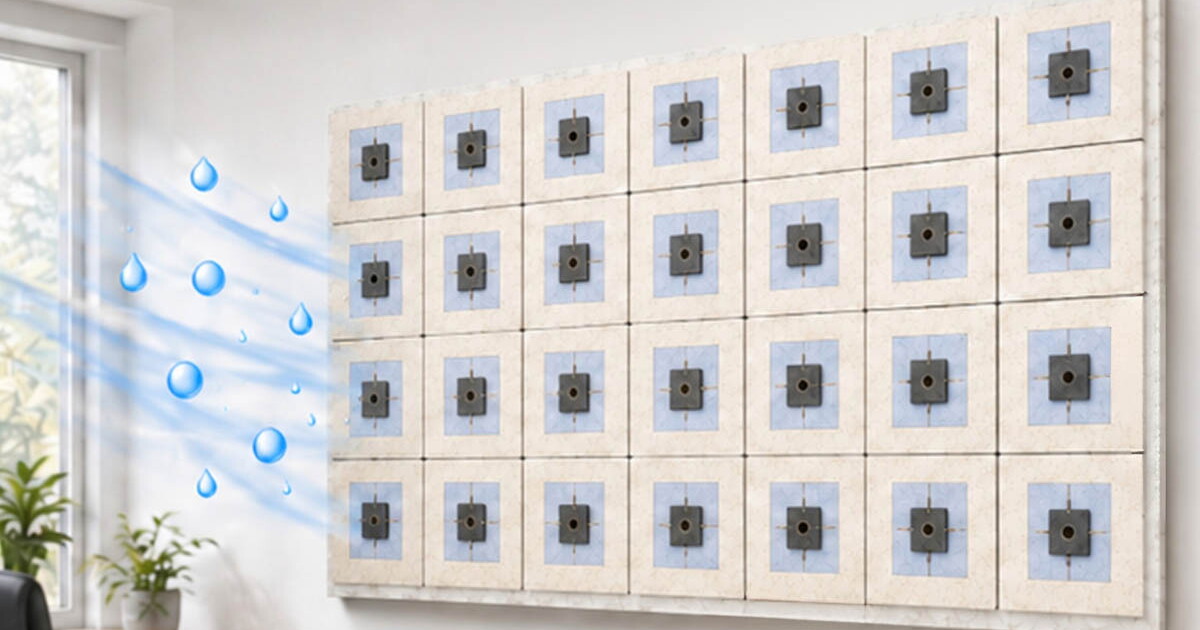
Paper array harvests indoor humidity to power a wireless keyboard

Binghamton University researchers demonstrated a paper array that powered a wireless keyboard by harvesting indoor humidity, with help from a capacitor that stores charge and releases it in bursts. The proof of concept, described ...

Science AI
Science AI

Coral imaging AI reaches operational testing with NOAA

University of Miami researchers developed PICOGRAM, an open-source AI system that measures coral colonies from underwater photographs, and NOAA has tested it at an operational scale. NASA assessed the project at Application Readin...