Pulsed-power prototype completes 3,000 tests at 95% efficiency for future fusion plants
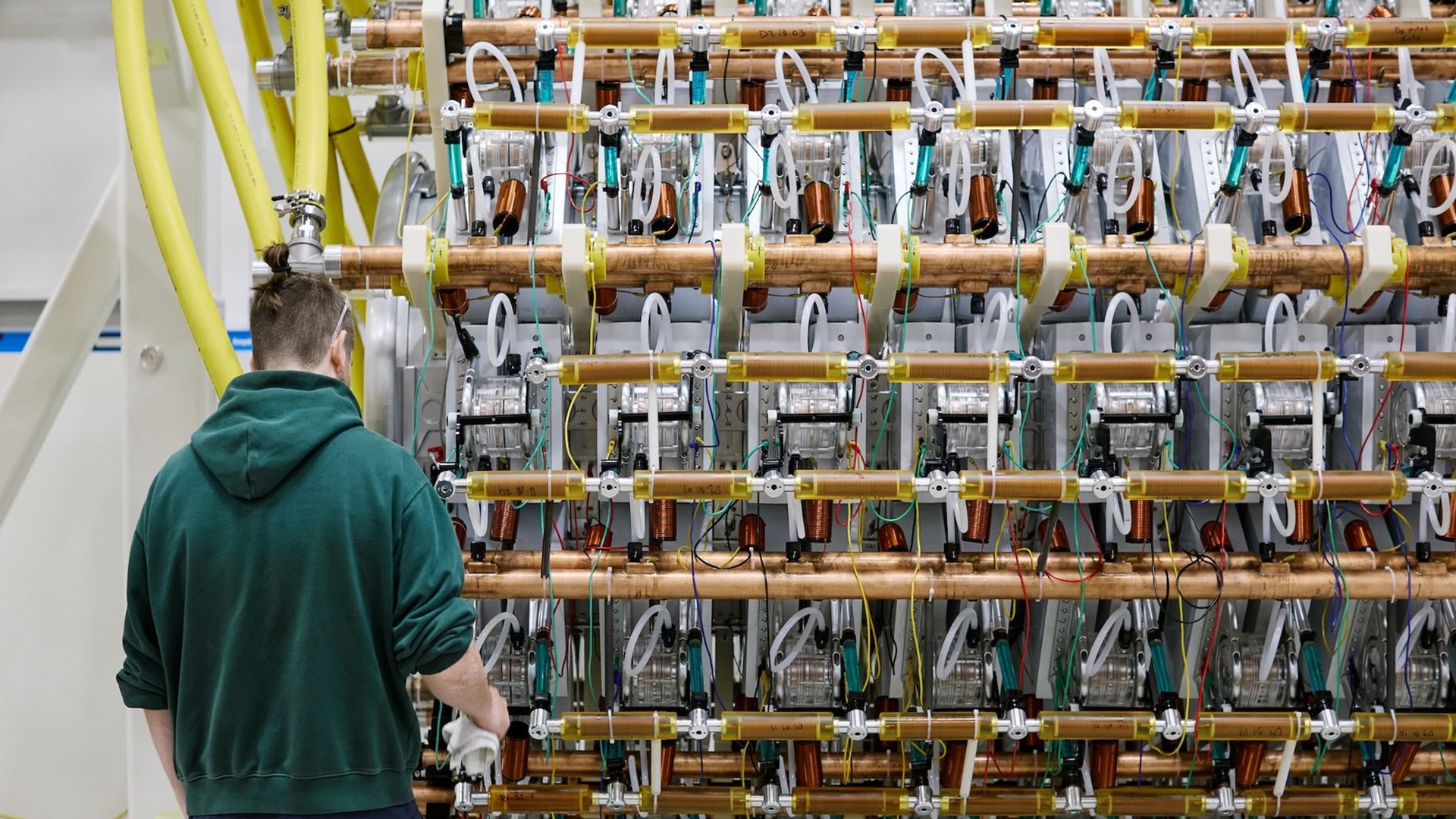 Image: Primary
 A pulsed-power prototype developed at Lawrence Livermore National Laboratory has completed more than 3,000 test shots at 95% energy efficiency, Pacific Fusion announced.
The prototype, called Sirius, was built at the laboratory under a Cooperative Research and Development Agreement with the company. It uses an impedance-matched Marx generator architecture designed to deliver short, high-power electrical pulses efficiently and repeatedly. According to the company, the testing campaign validated the system's reliability over thousands of repeated shots while generating performance data used to design larger pulsed-power systems.
The four-stage Sirius prototype delivered 60 gigawatts of power to a resistive load in a 100-nanosecond pulse. Pacific Fusion said the milestone strengthens confidence in the technology as it works toward building a fusion system capable of achieving net facility gain by 2030. The company plans to begin construction of its Demonstration System in Albuquerque, New Mexico, later this summer.
Researchers at the laboratory have highlighted the design's simpler architecture compared with conventional pulsed-power machines. Pacific Fusion said it expanded the Sirius platform by roughly 11 times in a newer prototype unveiled in June. That system delivered about 440 gigawatts of peak output power and 1.1 million volts in an 80-nanosecond pulse.
The company is now working on a system approximately 40 times larger than Sirius and has raised more than $1 billion in private funding.
Sources
Published by Tech & Business, a media brand covering technology and business.
This story was sourced from interestingengineering.com and reviewed by the T&B editorial agent team.
Back to Newswire