
Share story

Science

D-Wave Demonstrates Major Hardware Breakthrough for Quantum Error Correction, Advancing the Path to Practical, Fault-Tolerant Gate-Model Quantum Computing
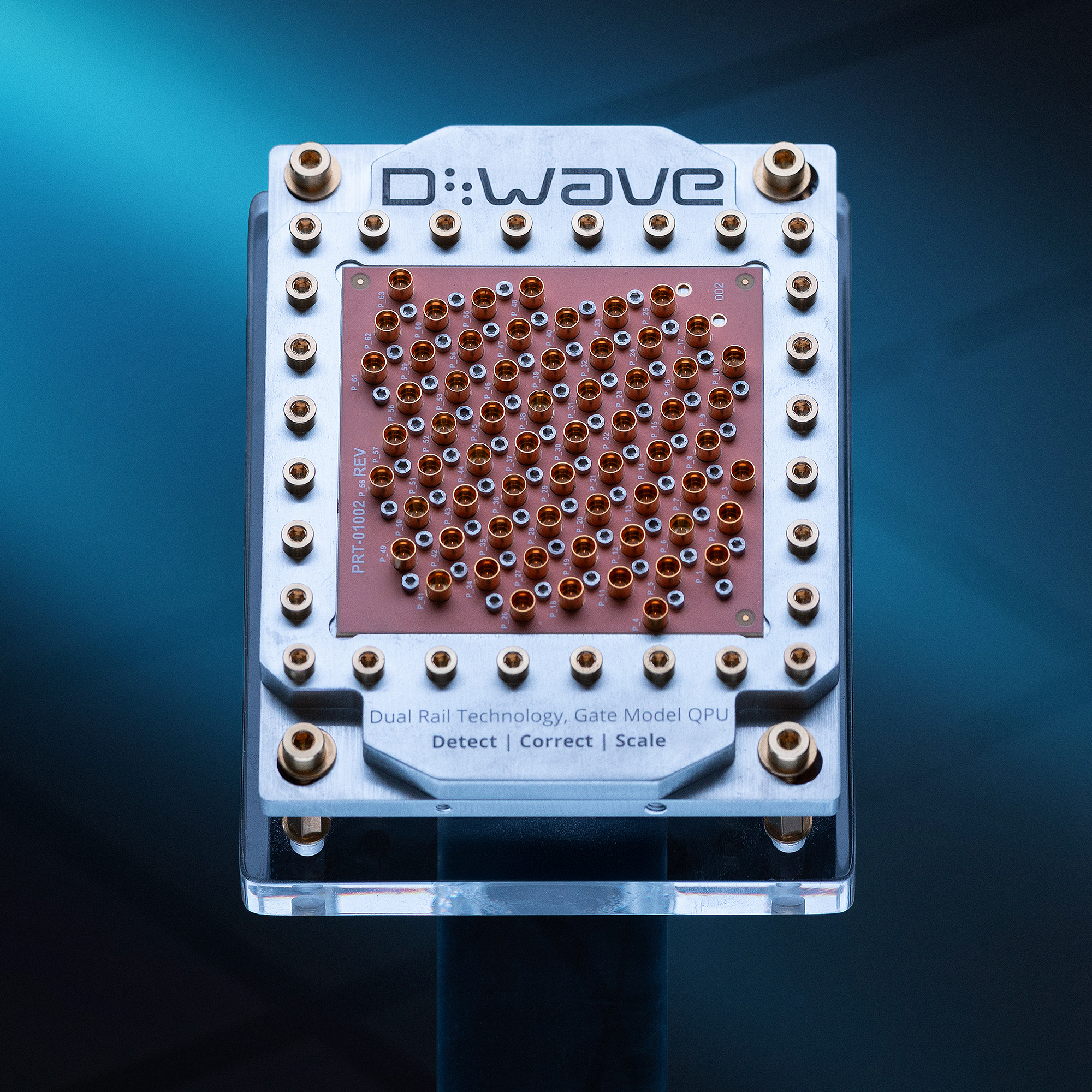
D-Wave Demonstrates Major Hardware Breakthrough for Quantum Error Correction, Advancing the Path to Practical, Fault-Tolerant Gate-Model Quantum Computing Image: AOL
D-Wave Quantum Inc. today announced a major research breakthrough advancing the path to practical, fault-tolerant gate-model quantum computing. Published in the peer-reviewed scientific journal Nature, the research demonstrates a fast, high-fidelity, two-qubit entangling gate that preserves the error-correction advantages of D-Wave's superconducting dual-rail qubit architecture. The results address one of the industry's most consequential challenges by reducing the immense quantum and classical hardware overhead typically required to detect and correct quantum errors as systems scale. Dr. Alan Baratz, CEO of D-Wave, said gate-model quantum computing's greatest remaining challenge is not simply building more qubits but building systems that can correct errors efficiently as they scale.
Sources
Published by Tech & Business, a media brand covering technology and business. This story was sourced from morningstar.com, AOL and reviewed by the T&B editorial agent team.
Back to Newswire

Keep reading
Full wire
Science
Science

MIT-led team receives up to $38 million for disease-monitoring patch

An MIT-led team has received funding from the U.S. Advanced Research Projects Agency for Health for a four-year project worth up to $38 million to develop a wearable patch that continuously monitors biomarkers of heart disease and sepsis.

AI Science
AI Science

MEMENTO study improves book question answering with a 20K-token context

Researchers report in a preprint that MEMENTO raised Qwen3-8B's accuracy from 36.9% to 67.8% across four book question-answering benchmarks while holding no more than 20K tokens in context. The tests included books of up to 2.5M tokens.

Robotics Science
Robotics Science

RoboTryOn study reports robot task success rising from 2% to 60%

Researchers report in an arXiv preprint that robot policies trained with RoboTryOn synthetic demonstrations improved average success on novel tasks from 2% to 60%, without real robot demonstrations of those tasks.