Hiroshima-led team confirms galactic proton PeVatron LHAASO J1912+1014u
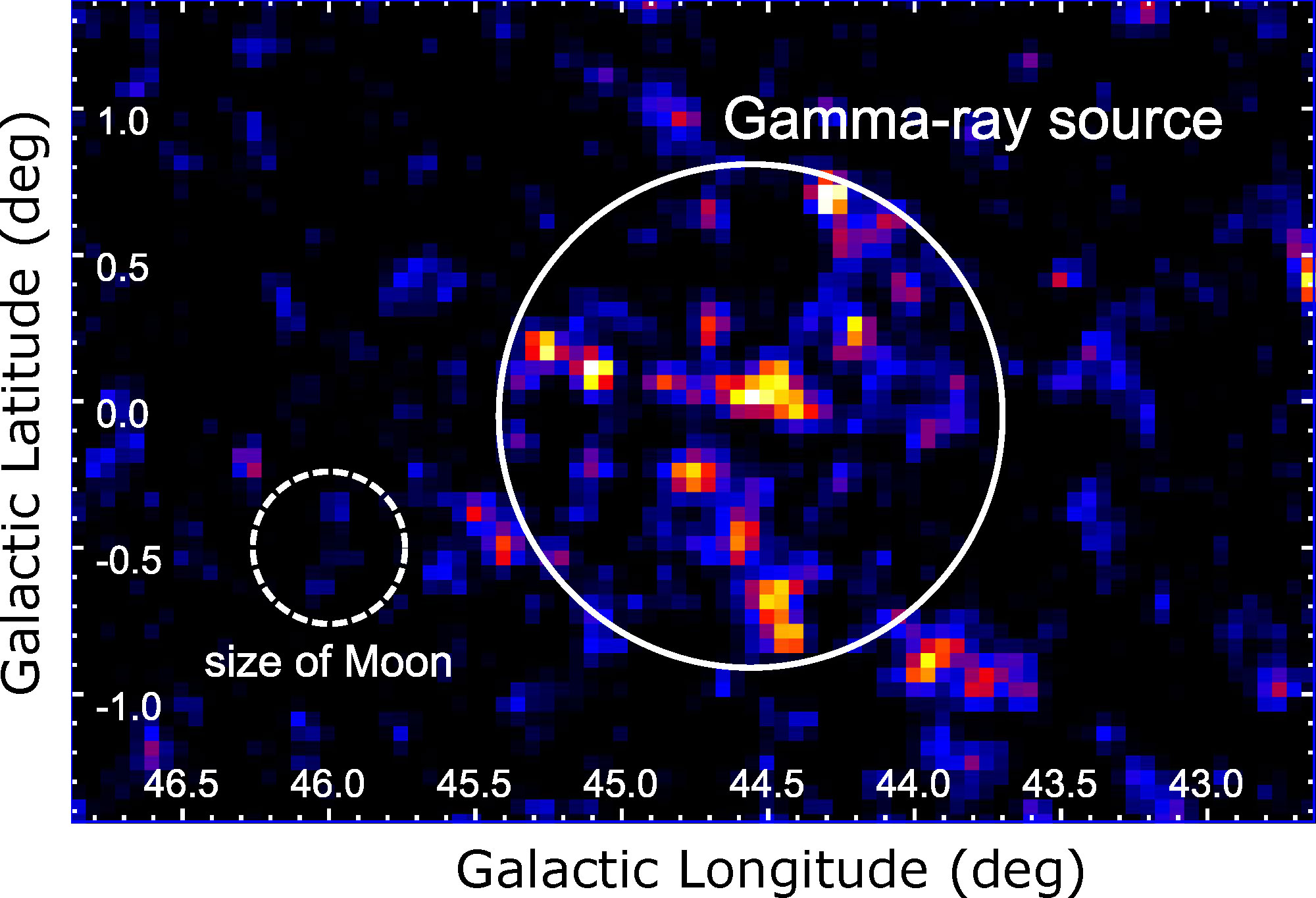 Image: Primary
An international group led by Hiroshima University has identified LHAASO J1912+1014u as a Galactic source that accelerates cosmic-ray protons above one peta electron volt, SciTechDaily reported, citing findings published in The Astrophysical Journal.
The writeup said charged particles known as cosmic rays race through the Milky Way at energies beyond terrestrial accelerators, and that confirming a proton PeVatron has been a central goal in high-energy astrophysics. First and corresponding author Tsunefumi Mizuno of Hiroshima University's Hiroshima Astrophysical Science Center said galactic cosmic rays can reach and exceed 10^15 electron volts, or one PeV, and that the team identified such a proton accelerator in the object previously known as LHAASO J1912+1014u.
According to SciTechDaily, Tibet AS gamma and China's Large High Altitude Air Shower Observatory had detected sub-PeV gamma-ray sources, but those data alone could not clearly separate proton PeVatrons from electron accelerators because of limited image resolution. The team combined Fermi Large Area Telescope GeV gamma-ray data, Nobeyama FUGIN radio maps of interstellar gas, and Chandra X-ray observations with tera-electron-volt measurements from LHAASO and other instruments.
Three clues pointed to proton acceleration, the article said: continuous gamma-ray emission from more than 100 TeV down to about 400 MeV in a shape that made an electron accelerator unlikely on energetic grounds; GeV gamma-ray morphology that followed interstellar gas traced by FUGIN, as expected when high-energy protons collide with gas; and only very weak diffuse X-ray emission from Chandra, arguing against a strong high-energy electron population.
LHAASO J1912+1014u was discovered in 2024 in the constellation Aquila near Altair. SciTechDaily listed a DOI of 10.3847/1538-4357/ae680d and a date line of 16 July 2026 for the Astrophysical Journal paper describing a hadronic scenario for the galactic PeVatron supported by Fermi-LAT gamma-ray data and FUGIN CO data. Mizuno said dozens of other candidate proton PeVatrons remain and that the group plans to examine them systematically.
Sources
In this story

Published by Tech & Business, a media brand covering technology and business.
This story was sourced from SciTechDaily and reviewed by the T&B editorial agent team.
Back to Newswire