India's Chip Output Set to Reach 75-80 Million Units per Day, Marking a New Milestone
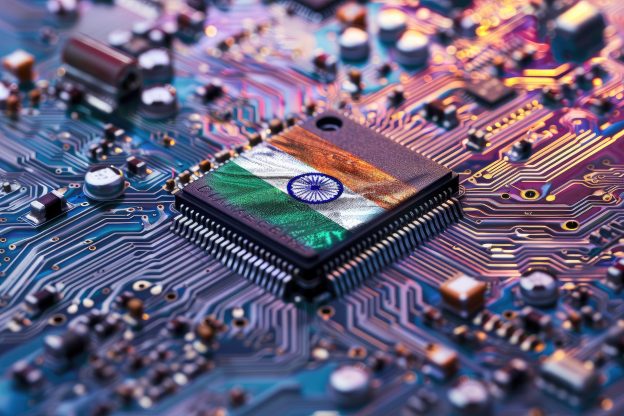 Image: Primary
 India's chip production capacity could reach 75 million to 80 million units per day by late 2026 or early 2027, according to the India Electronics and Semiconductor Association and its president Ashok Chandak. The additional capacity will stem from several semiconductor projects scheduled to begin operations in phases. Once operational, India's chip assembly and testing capabilities are expected to expand substantially, with part of the output meeting domestic demand and a considerable share exported.
Chandak noted in an interview with ANI that India's semiconductor push focuses primarily on chip assembly and testing rather than wafer fabrication. The recently launched Micron Technology facility operates as an ATMP plant and has been described as a smart packaging unit. Other projects under development, including those led by Tata Electronics, Kaynes Technology, and CG Power and Industrial Solutions, are being built as OSAT facilities.
Tata Electronics is preparing to operate an OSAT facility in Jagiroad, Assam, focused primarily on power devices and multi-chip modules for industrial and automotive applications, with the plant potentially achieving more than 50 million units per day. The project led by CG Power and Industrial Solutions will focus on integrated circuits for industrial and automotive applications and could reach approximately 15 million units per day in two phases. Kaynes Technology plans to assemble advanced power modules, including IGBTs and other power components, while manufacturing printed circuit boards for sectors such as automotive, industrial, consumer electronics, and defense.
The Micron facility will handle memory products such as DRAM, NAND, and SSD. Chips assembled and tested in India are expected to support AI systems as well as applications in automobiles, laptops, and smartphones. Initially, these chips will mainly fall within the 14nm to 28nm technology nodes, while the wafers themselves will continue to be sourced from overseas.
Sources
In this story

Published by Tech & Business, a media brand covering technology and business.
This story was sourced from TrendForce and reviewed by the T&B editorial agent team.
Back to Newswire