MIT Lincoln Lab advances LightHOUSE optical beacons for cislunar navigation
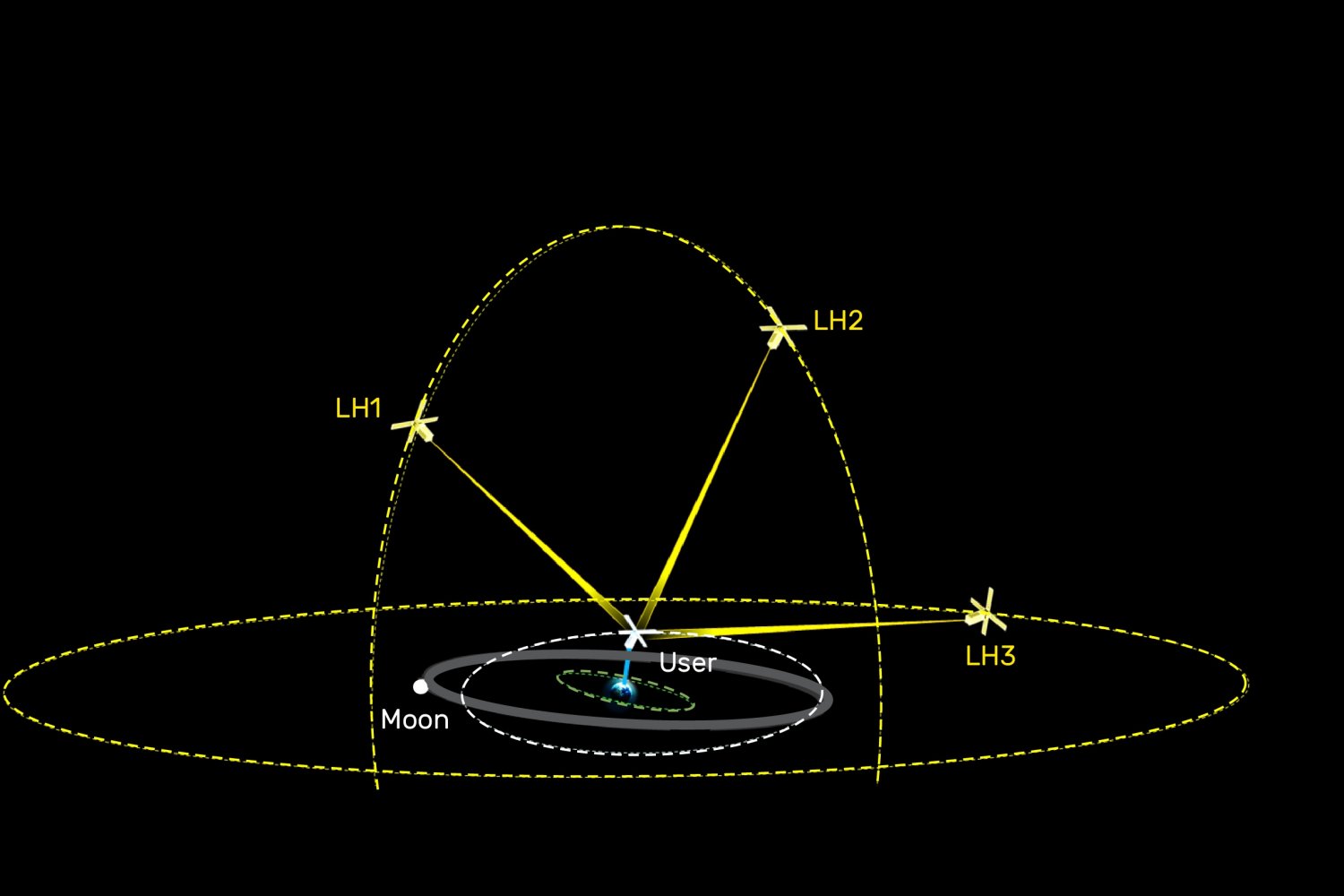 Image: Primary
 MIT Lincoln Laboratory teams are developing LightHOUSE, a concept for a small constellation of high-orbit satellites that would act as cooperative optical beacons for spacecraft in cislunar space, according to MIT News. Missions beyond geosynchronous orbit still lean on NASA's Deep Space Network, which is Earth-based, capacity-limited, and requires user craft to transmit for ranging, unlike passive GPS.
LightHOUSE would use free-space laser links and stellar-background imaging to estimate three-dimensional position and velocity, aiming to cut corrective burns, spare propellant, ease onboard sensors, and reduce ground-network load. Beacons would sit in ultrahigh orbits up to roughly 1 million miles, giving angular diversity across cislunar volumes and a path to far-side-of-the-moon contact that can avoid blackouts such as the 40-minute period when Artemis II passed behind the moon.
The design would put most of the hardware burden on the beacons, with tens-of-centimeter telescopes and tens-of-watts lasers on the infrastructure side and only centimeter-scale apertures and tens-of-milliwatt lasers on users. The concept builds on NASA-sponsored optical programs including TBIRD and O2O and on laboratory optical time-transfer work. Staff members Aaron Greenberg, Timothy Yarnall, and Seth Trotz described strategic demand for cislunar PNT and the asymmetry challenge of closing links across the domain.
The team is refining the architecture through analysis, simulation, and lab work, with a nearer-term plan to publish a detailed user-data architecture. Sponsorship runs through the undersecretary of war for research and engineering via Lincoln's internal sensing and communications R&D portfolio. MIT News said a full-scale system could require investment on the order of hundreds of millions of dollars, versus about $1.8 billion a year to operate GPS and roughly $85-100 million for a single DSN dish.
Sources
In this story

Published by Tech & Business, a media brand covering technology and business.
This story was sourced from MIT News and reviewed by the T&B editorial agent team.
Back to Newswire