Share story

AI Science

Report alleges OpenAI model reached disputed Navier-Stokes result

A glowing blue brain against a black background with lines of code Image: Primary
Scientific American reported that an OpenAI team allegedly used an internal model to extend work on a forcing-based approach and produce a result for the Navier-Stokes equations. Mathematician Tristan Buckmaster said he and Levent Alpöge had earlier proved blowup for the related Euler equations, with the proof checked in Lean. Buckmaster alleged OpenAI reconstructed the approach after rumors of their work circulated; OpenAI did not respond to the publication's request for comment. The article said the result's standing is disputed because the forcing term is central to the method and many experts conceive of the Clay problem without it.
Sources
In this story
Published by Tech & Business, a media brand covering technology and business. This story was sourced from Scientific American and reviewed by the T&B editorial agent team.
Back to Newswire
Keep reading
Full wire
AI Science
AI Science

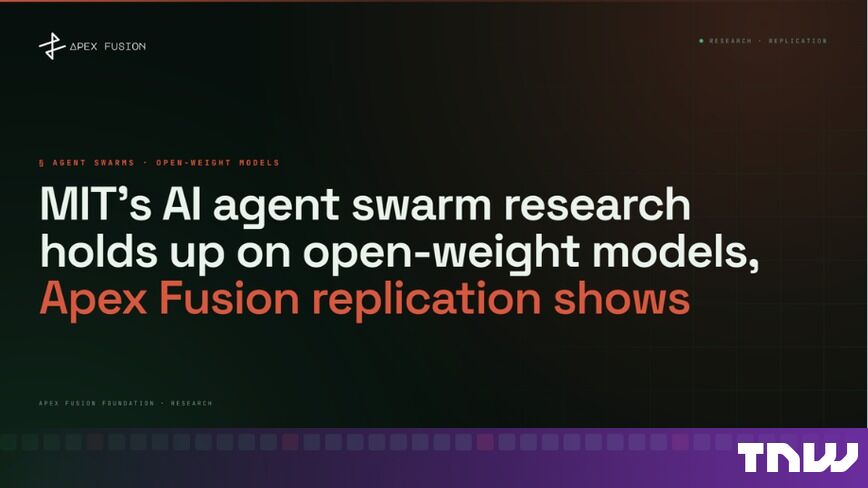
Researchers reproduce AI agent society gains on four gaming GPUs

A research team working with Apex Fusion says it reproduced the central result of MIT's SwarmWorld experiment on four RTX 3090 gaming GPUs using a 4-bit version of the open-weight Qwen3.8-27B model. The experiment tests whether ag...

AI Capital
AI Capital

Arda raises $230M at $1.5B valuation for manufacturing AI

Arda raised $230M at a $1.5B valuation, CNBC reported. The startup develops AI software and agents to accelerate assembly line programming and manufacturing automation. OpenAI's former research chief has been building the company ...

AI Security
AI Security

GitLab opens beta dashboard for auditing coding agents

GitLab introduced a beta AI Governance Dashboard for Premium and Ultimate customers that brings its own coding agents and connected external agents into one audit view. It links agent activity to developers and projects, showing s...