Share story

Science

Quantum Earnings Week: Winners and Losers Are Finally Emerging

The Globe and Mail Image: Primary
Quantum computing companies IonQ Inc., Rigetti Computing and D-Wave Quantum Inc. reported earnings this week, reinforcing a split between technological progress and market skepticism, according to MarketBeat. IonQ differentiated itself with the strongest report, beating Wall Street estimates for both top- and bottom-line performance. The company generated losses per share of 33 cents, narrower than the 56 cents predicted by analysts, while posting 287% year-over-year revenue growth to more than $80 million in sales. Management forecast full-year revenue between $280 million and $290 million, though the company reported negative adjusted EBITDA of $120 million and GAAP operating expenses exceeding $417 million. Rigetti posted a modest revenue beat with sales climbing to $5.1 million from $1.8 million a year prior and gross margin improving to 43%. The firm holds more than half a billion dollars in cash with no debt, but operating expenses surged to $30.3 million, leading to non-GAAP net losses of about $16 million. IonQ shares have soared 19% in the last five trading days while D-Wave stock is up 12% over the same period.
Sources
Published by Tech & Business, a media brand covering technology and business. This story was sourced from The Globe and Mail and reviewed by the T&B editorial agent team.
Back to Newswire
Keep reading
Full wire
Science Infrastructure

Researchers demonstrate temperature sensor powered by nearby electrical wiring

Researchers at the University of Arkansas and the University of Michigan demonstrated a battery-free temperature sensor powered by energy captured from magnetic fields near electrical wiring, New Atlas reports.

Science
Science

MIT modules retain electrical connections as structures change shape

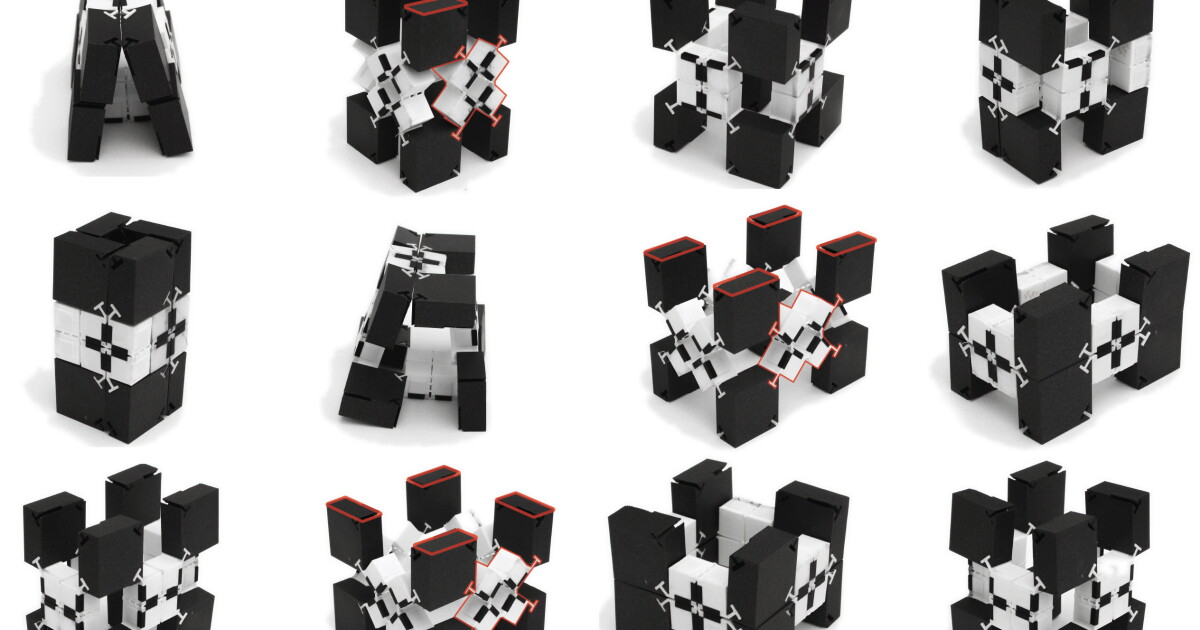
MIT researchers and collaborators have developed 3D-printed modules that change shape while maintaining electrical connections, New Atlas reports. The team's design endured 10,000 compressions without losing electrical connection during testing.

Science
Science

Two-ion experiment simulates how quantum flux controls particle motion

University of Oxford researchers demonstrated how quantum flux can stop particle motion in a simulated lattice gauge theory, using two trapped ions, Phys.org reported. The experiment extends beyond one-dimensional setups that cannot capture effects associated with magnetic flux.

Science Infrastructure

IBM, AMD and Oak Ridge announce colocated quantum error-correction platform

IBM, AMD and Oak Ridge National Laboratory's Quantum Science Center unveiled a platform this week that will place quantum computers alongside classical high-performance computing systems to research error correction.