Arizona's San Carlos Reservoir Drops Below 1% Capacity After Snowpack Collapse
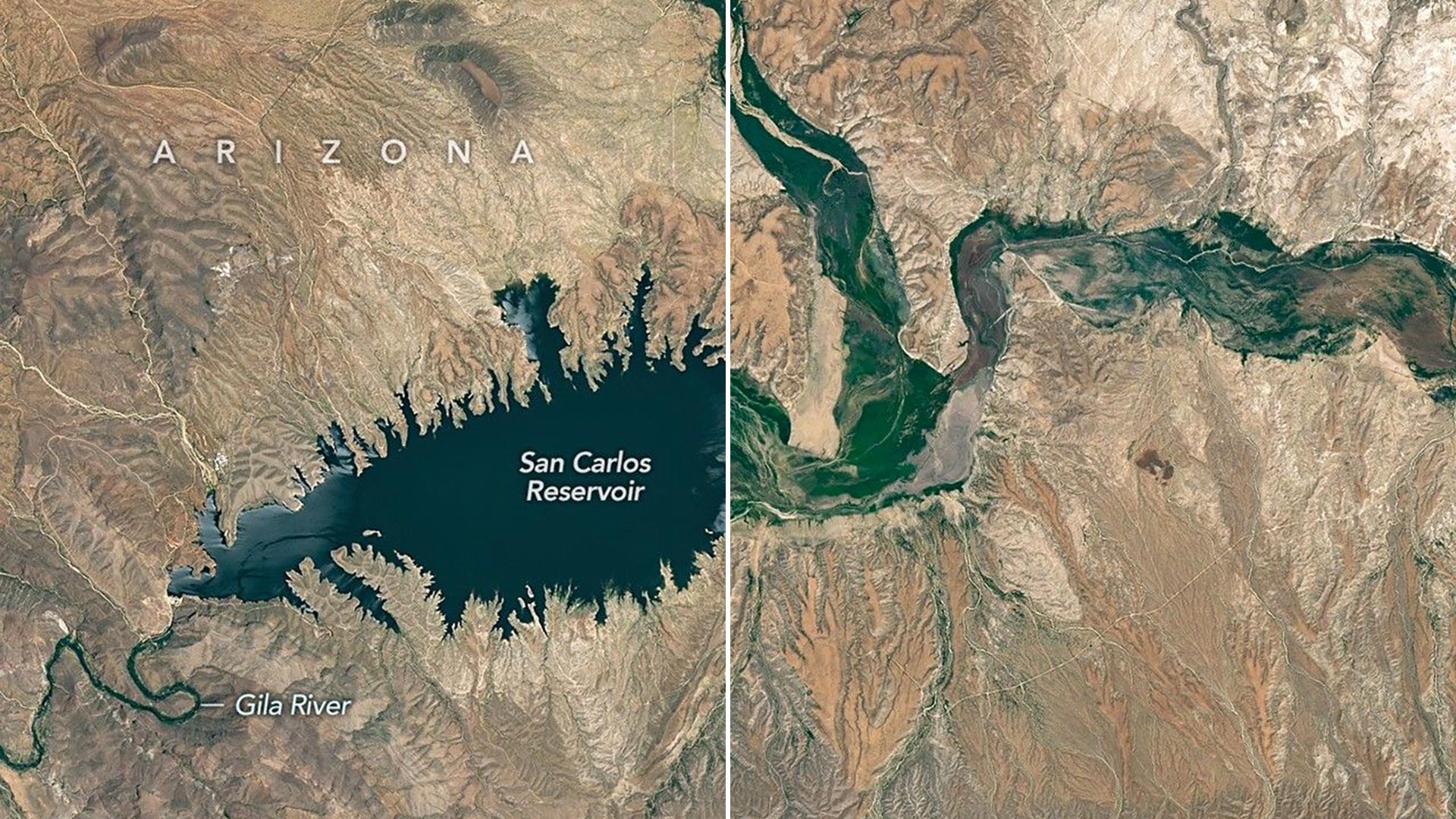 Image: Primary
 One of Arizona's largest reservoirs has shrunk to less than 1% full after an exceptionally poor snow season, wiping out nearly all its fish and leaving recovery dependent on future rains. The San Carlos Reservoir, formed by Coolidge Dam on the Gila River, held just 389 acre-feet of water as of May 22, 2026, down from roughly 60% capacity in June 2023.
The Gila River watershed's snowpack across the Mogollon Mountains and Black Range measured just 2% of the 1991-2020 March median. With so little snow to melt, April streamflow dropped to only 39% of normal. After required water releases for downstream farms, the reservoir continued to decline.
Satellite imagery captured the dramatic transformation. By June, officials indefinitely closed San Carlos Reservoir. Falling oxygen levels triggered hypoxia, killing virtually all fish including largemouth bass, catfish, and bluegill.
The reservoir supplies water for communities, agriculture, and wildlife across the American Southwest. Its collapse highlights the vulnerability of the region's water infrastructure to consecutive low-snow years. Recovery depends entirely on future precipitation in a basin where climate models project increasing aridity.
Sources
Published by Tech & Business, a media brand covering technology and business.
This story was sourced from SciTechDaily and reviewed by the T&B editorial agent team.
Back to Newswire