Songs You Imagine Can Be Decoded Directly From Your Brain
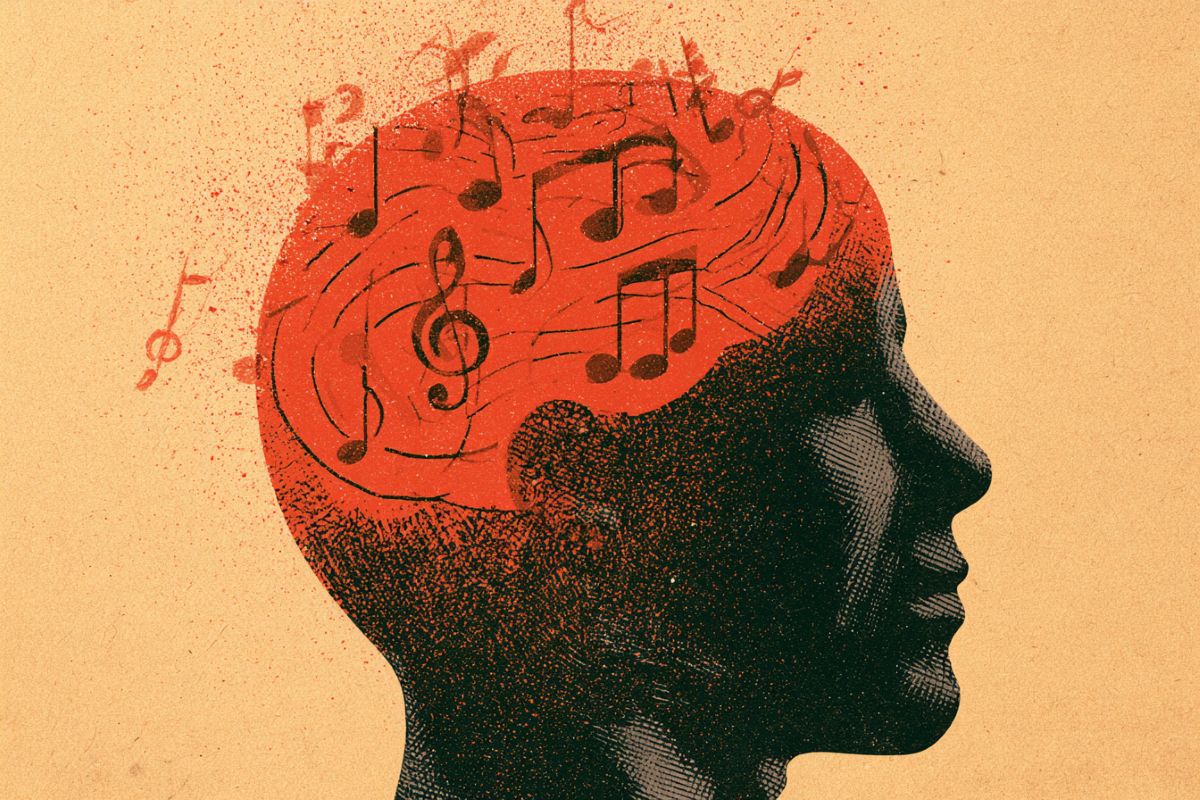 Image: Primary
 A neuroscience study led by Jii Kwon and Chun Kee Chung of Seoul National University demonstrated that musical melodies imagined in the human brain can be decoded and reconstructed using surface electrode brain signals, according to findings published in eNeuro.
The research analyzed invasive brain activity from ten epilepsy patients undergoing clinical intracranial monitoring. Participants listened to the opening bars of familiar children's songs, mentally imagined the continuation of the melodies, and subsequently hummed them aloud. By targeting brain signals encoding relative pitch classes such as do, re, and mi, the research team successfully reconstructed the melodic contours of the imagined music over time.
The model decodes relative pitch classes rather than exact absolute pitches, mirroring human perceptual invariance across different musical keys. The findings provide direct neural evidence for internal musical representation and offer a foundation for developing music-based brain-computer interfaces for non-verbal populations. Kwon said the findings may eventually help develop ways of reconstructing imagined melodies for individuals with little music background or patient populations such as those with Amyotrophic Lateral Sclerosis who cannot articulate what they are imagining.
Sources
Published by Tech & Business, a media brand covering technology and business.
This story was sourced from Neuroscience News and reviewed by the T&B editorial agent team.
Back to Newswire