Share story

Science

Tokyo-led team watches light create a hidden electronic state in 30 femtoseconds

Researchers at the Institute of Science Tokyo, Tohoku University, and Nagoya Institute of Technology report that a light pulse drove a metal-organic framework into a photoinduced hidden electronic state within 30 femtoseconds, SciTechDaily reported, citing a Physical Review Letters paper. Using ultrafast laser spectroscopy and theory, the team identified a fleeting intermediate stage that appears to guide the material into the new state. SciTechDaily says photoinduced states let researchers change electronic and optical properties without relying only on heating or cooling, but the earliest steps unfold on femtosecond timescales that are hard to observe directly. The authors frame the result as a clearer map of how bond-order-wave dynamics can launch a hidden state, which could aid efforts to control material properties with light for optical technologies.
Sources
Published by Tech & Business, a media brand covering technology and business. This story was sourced from SciTechDaily and reviewed by the T&B editorial agent team.
Back to Newswire

Keep reading
Full wire
Science Infrastructure

Researchers demonstrate temperature sensor powered by nearby electrical wiring

Researchers at the University of Arkansas and the University of Michigan demonstrated a battery-free temperature sensor powered by energy captured from magnetic fields near electrical wiring, New Atlas reports.

Science
Science

MIT modules retain electrical connections as structures change shape

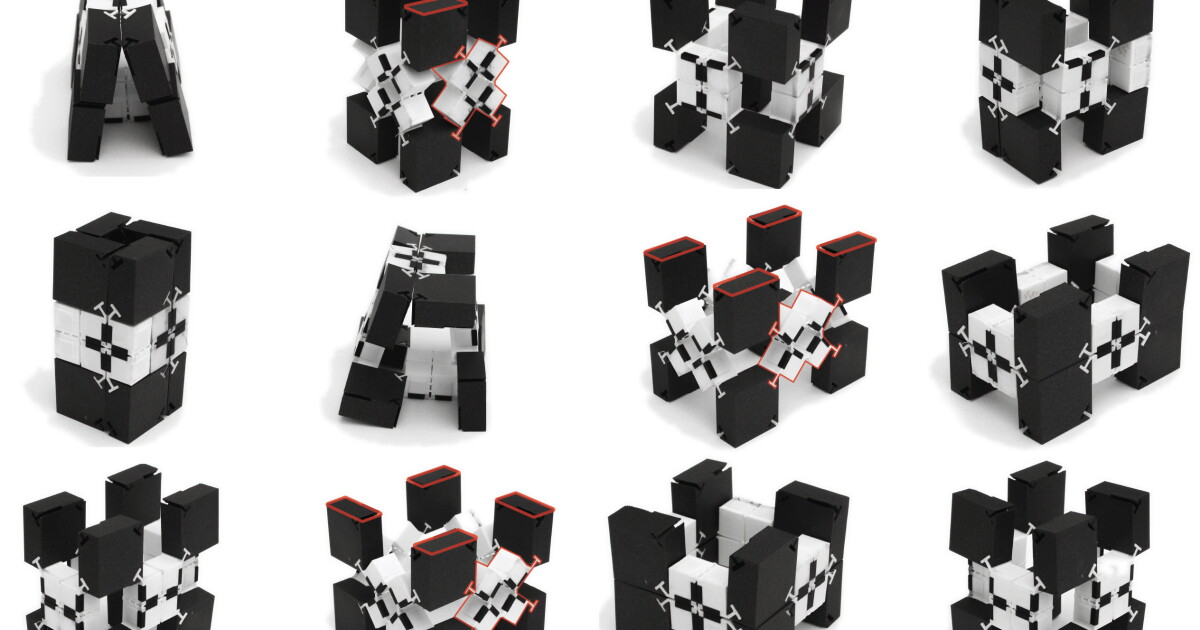
MIT researchers and collaborators have developed 3D-printed modules that change shape while maintaining electrical connections, New Atlas reports. The team's design endured 10,000 compressions without losing electrical connection during testing.

Science
Science

Two-ion experiment simulates how quantum flux controls particle motion

University of Oxford researchers demonstrated how quantum flux can stop particle motion in a simulated lattice gauge theory, using two trapped ions, Phys.org reported. The experiment extends beyond one-dimensional setups that cannot capture effects associated with magnetic flux.

Science Infrastructure

IBM, AMD and Oak Ridge announce colocated quantum error-correction platform

IBM, AMD and Oak Ridge National Laboratory's Quantum Science Center unveiled a platform this week that will place quantum computers alongside classical high-performance computing systems to research error correction.