WashU researchers use quantum biosensors to peer into cells' inner workings
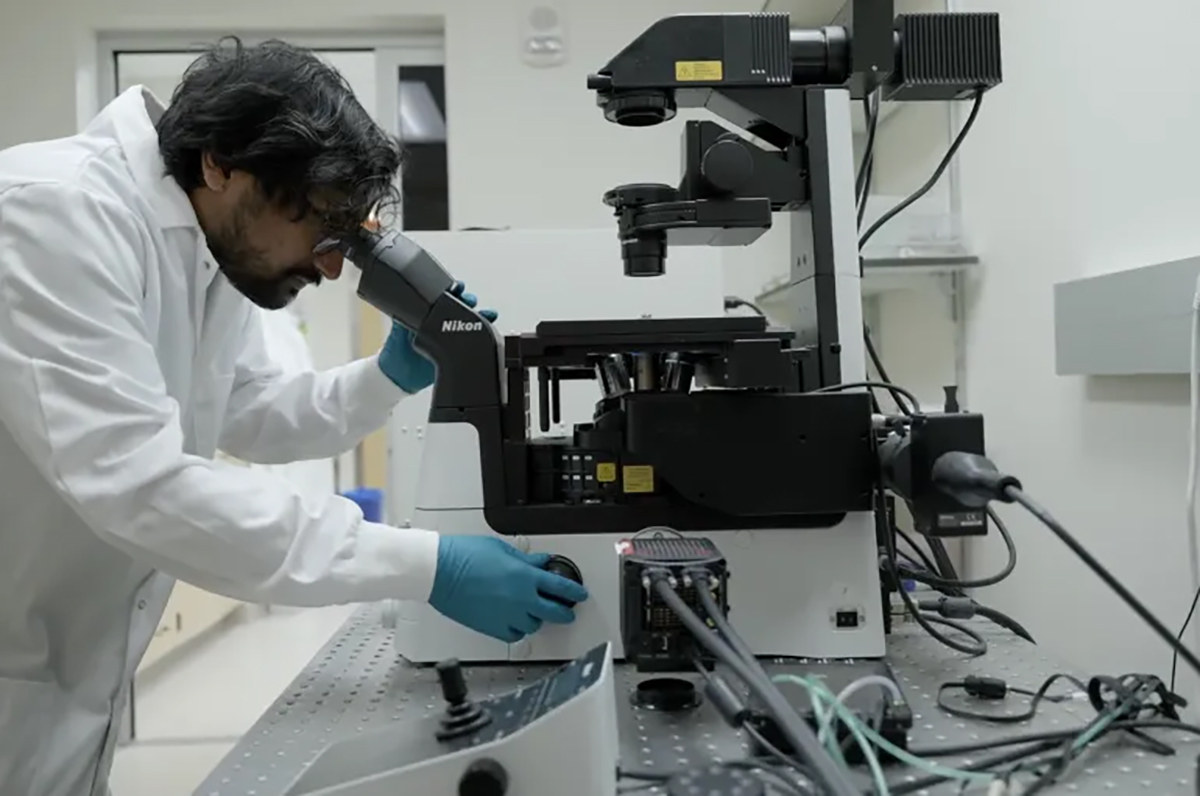 Image: Primary
 Washington University in St. Louis researchers have successfully placed quantum sensors inside living cells to measure shifts in magnetism and temperature. The sensors are nanodiamonds engineered with nitrogen vacancies that trap electrons sensitive to their environment. The measurements focused on mitochondria and revealed nuances in how iron-containing molecules move during metabolism.
Shakil Kashem, a physics graduate student, and Stella Varnum, a recent PhD graduate in immunology, led the work. They are co-lead authors of a preprint published on bioRxiv. Kashem presented the research at the annual meeting of the American Physical Society.
Co-senior authors include physics assistant professors Chong Zu and Shankar Mukherji along with pathology and immunology associate professor Jonathan Brestoff. The team enlisted macrophages to deliver the nanodiamonds into mouse cells. Researchers used a special microscope to track how electrons within the diamonds responded to temperature and magnetic changes.
Kashem said the findings suggest that the movement of iron-containing molecules plays an important role in metabolism. He added that the technique could lead to new ways to measure mitochondrial health. The project required collaboration across physics, engineering and biology, according to the researchers.
Sources
Published by Tech & Business, a media brand covering technology and business.
This story was sourced from WashU and reviewed by the T&B editorial agent team.
Back to Newswire