Share story

Science

OHSU study uncovers internal cell 'trade winds' that drive movement and repair
OHSU study uncovers internal cell 'trade winds' that drive movement and repair Image: Primary
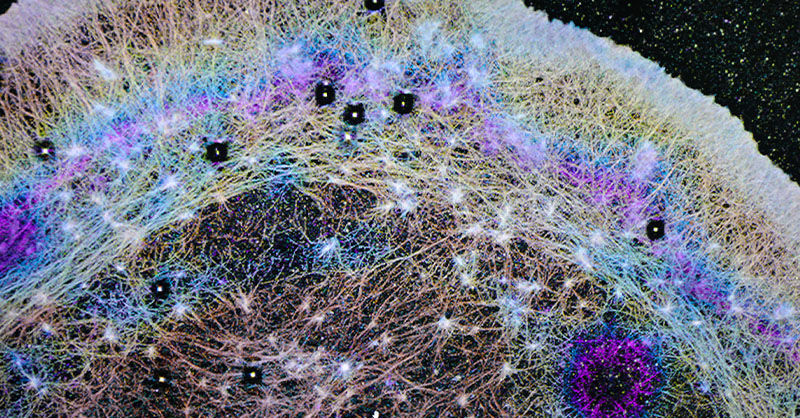
Scientists at Oregon Health and Science University have uncovered a system of internal fluid flows that push essential proteins to the front of cells. The discovery, published in Nature Communications, shows that cells actively generate targeted streams rather than relying solely on random diffusion for protein transport. Researchers describe the mechanism as critical to cell migration, cancer spread and wound healing. The finding originated from an unexpected observation during a neurobiology course at the Marine Biological Laboratory, according to co-corresponding authors Catherine Galbraith and James Galbraith. The Galbraiths, associate professors in the OHSU Biomedical Engineering Department and investigators in the OHSU Knight Cancer Institute, used laser techniques to track proteins inside living cells. A second dark line appeared at the leading edge, revealing a wave of soluble actin being directed forward by the flows. Experiments showed the cells create directional currents, compared to atmospheric rivers, inside a specialized compartment at the front separated by an actin-myosin condensate barrier. The nonspecific flows sweep up many types of proteins at once to support protrusion, adhesion and shape changes needed for movement, immune response and tissue repair. The Galbraiths said the mechanism may explain why certain cancer cells migrate aggressively. The project drew on collaborators at Janelia Research Campus and received support from the National Institute of General Medical Sciences and other organizations.
Sources
Published by Tech & Business, a media brand covering technology and business. This story was sourced from OHSU News and reviewed by the T&B editorial agent team.
Back to Newswire
Keep reading
Full wire
Science
Science

Infleqtion claims 30 entangled logical qubits on Sqale system

Infleqtion says it created 30 entangled logical qubits on its Sqale quantum computing system, a company-reported step toward operations across error-protected quantum bits. A logical qubit encodes information across multiple physi...

Capital AI
Capital AI

NUS Enterprise launches patent-matching platform and Munich outpost

NUS Enterprise says it has launched Nova, an AI platform developed with Zima Labs to help its staff find commercial partners for university research. It has also established an outpost in Munich through a partnership with Unterneh...

Security
Security

NFM Lending faces lawsuit after acknowledged cyber incident

NFM Lending faces a class-action lawsuit after acknowledging a cybersecurity incident, The Tech Edvocate reports. Former customer Sheneka Smith alleges that the mortgage lender failed to maintain reasonable safeguards for customer...

Infrastructure Products

Microsoft offers rollback for Windows desktop loading fault

Microsoft has confirmed that updates beginning with its August 2026 preview release can leave some users with a black screen after sign-in or cause Windows Explorer to crash. The problem mainly affects Azure Virtual Desktop hosts ...

Products Infrastructure

DLSS 5 test finds higher power draw and connector heat on RTX 5090

Enabling Nvidia's DLSS 5 raised power draw through a GeForce RTX 5090 Founders Edition's 16-pin connector from 582.7W to 646.7W in tests by Korean outlet QuasarZone, Tom's Hardware reports. The connector reached 91.7 degrees Celsi...

AI Policy
AI Policy

Pentagon seeks $30.3 million for AI-based lie detector program

The Pentagon is seeking $30.3 million over five years for a program to develop AI-based scoring and contactless sensing for lie detection, MIT Technology Review reports, citing a Defense Department budget request. The proposed Pol...