Xcimer Energy publishes peer-reviewed SBS breakthrough enabling cheaper laser fusion
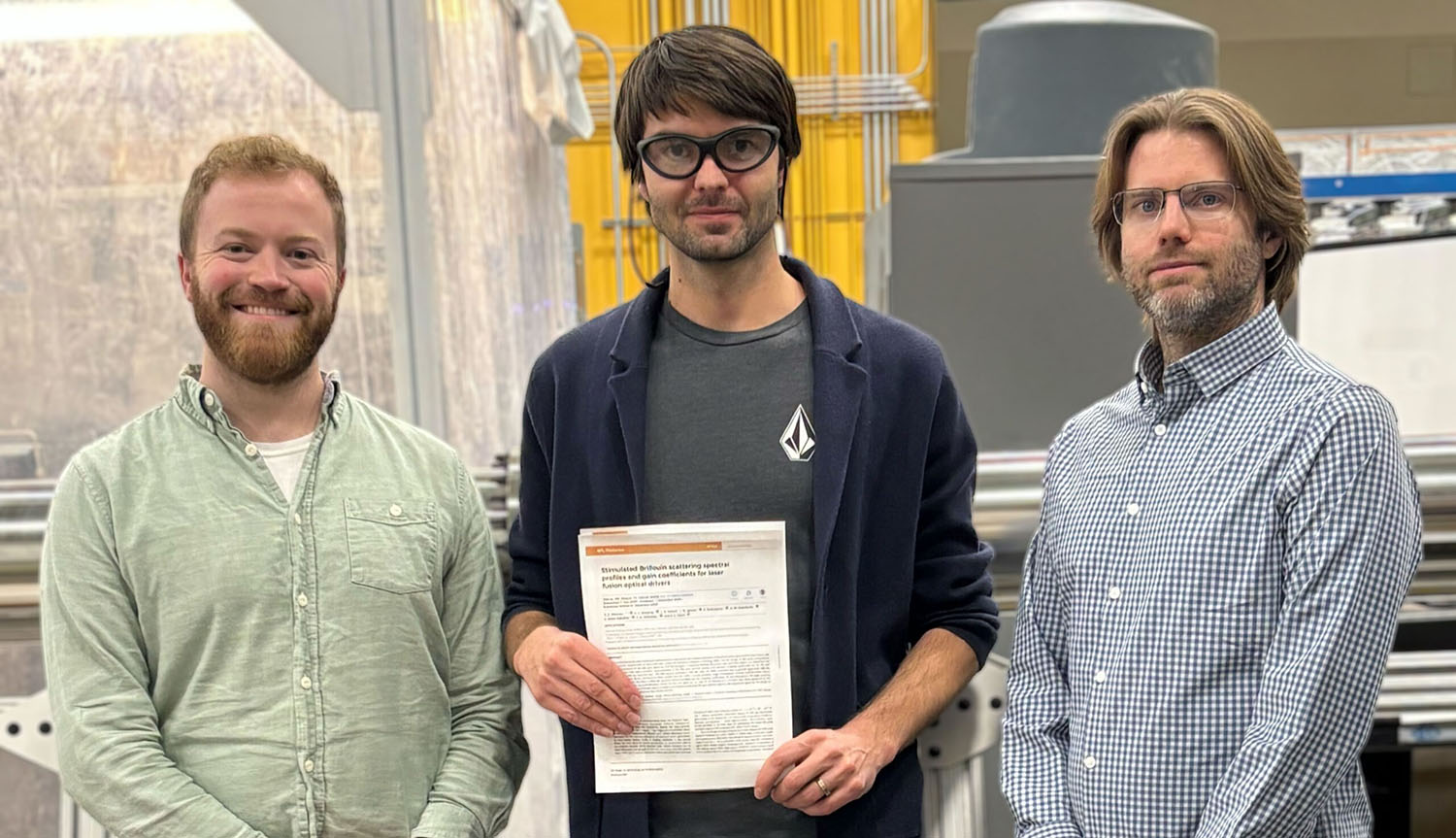 Image: Primary
 Researchers from Xcimer Energy, the University of Illinois and the University of Alberta have published peer-reviewed measurements of Stimulated Brillouin Scattering gain and spectral structure in low-pressure noble gases. The paper appeared in APL Photonics and reports the first absolute high-resolution data on the process.
The measurements overturn assumptions in standard models that have guided nonlinear optical physics for decades. They show that SBS in atmospheric-pressure gases follows kinetic rather than hydrodynamic physics and produces interaction strengths more than an order of magnitude larger than textbook predictions.
The results confirm a central element of Xcimer's laser fusion design. That architecture generates microsecond-scale pulses from low-cost excimer lasers and compresses them roughly 1,000 times via SBS in low-pressure noble gases. The approach requires far fewer material optics than conventional solid-state systems and avoids damage limits that constrain those systems.
Conner Galloway, CEO and co-founder of Xcimer Energy, said the data show that the physics in standard SBS models is incorrect for low-pressure noble gases. He added that the kinetic model governs the process and enables multi-megajoule-class laser systems.
Dr. Andrey Mironov, who led the experiment at the University of Illinois Urbana-Champaign, said the paper demonstrates that Xcimer's architecture is viable from an SBS physics perspective. The work was funded by Xcimer and conducted at UIUC.
Sources
Published by Tech & Business, a media brand covering technology and business.
This story was sourced from Xcimer Energy and reviewed by the T&B editorial agent team.
Back to Newswire