James Webb Space Telescope finds precursors to building blocks of life in nearby galaxy
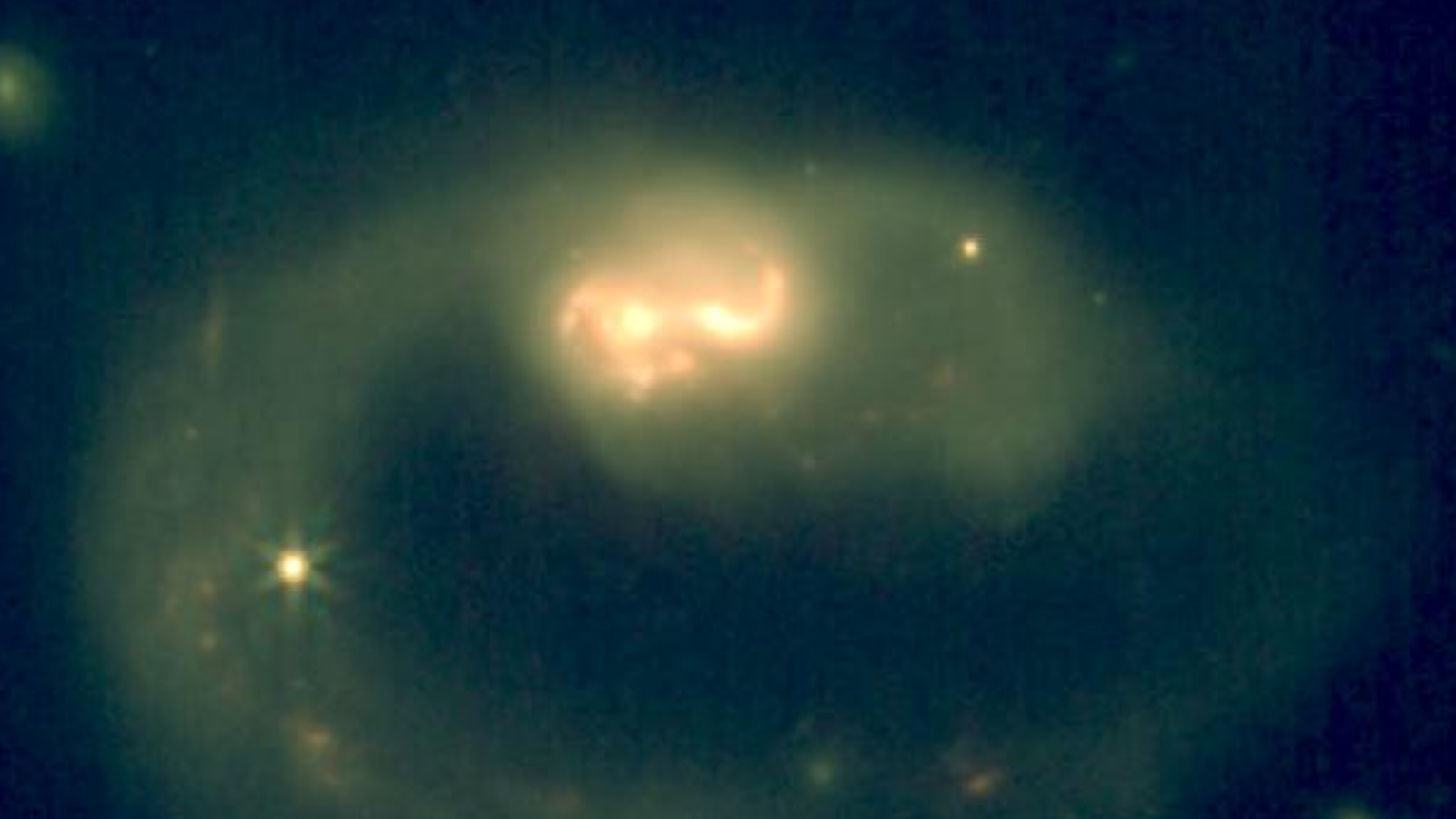 Image: Primary
 Astronomers using the James Webb Space Telescope have discovered molecules that could serve as the initial building blocks of life in the galaxy IRAS 07251-0248. The ultra-luminous infrared galaxy is bright and relatively close. Its dense galactic heart is obscured by large amounts of dust and gas.
The team used the telescope's Near InfraRed Spectrograph and Mid-Infrared Instrument to study the galaxy. They found an unexpected chemical complexity with abundances far higher than predicted by current theoretical models. "We found an unexpected chemical complexity, with abundances far higher than predicted by current theoretical models," team leader Ismael Garcia Bernete of the Center for Astrobiology said in a statement. "This indicates that there must be a continuous source of carbon in these galactic nuclei fuelling this rich chemical network."
The observations revealed a rich inventory of small organic molecules. These include benzene, methane, acetylene, diacetylene, triacetylene, and the methyl radical, which had not been detected beyond the Milky Way before. Solids such as grains of carbon-based material and water ice were also present in gas, dust, and ices.
Dimitra Rigopoulou of the University of Oxford said that although the small organic molecules are not found in living cells, they could play a vital role in prebiotic chemistry. "Although small organic molecules are not found in living cells, they could play a vital role in prebiotic chemistry, representing an important step towards the formation of amino acids and nucleotides," Rigopoulou said. The chemistry cannot be explained by extreme temperatures and turbulent gas stirring alone.
The team suggests that bombardment by high-energy cosmic rays may have fragmented larger carbon-rich dust grains and released the small organic molecules. The findings indicate that heavily obscured galactic nuclei could act as production lines for organic molecules. The results were published Friday in the journal Nature.
Sources
Published by Tech & Business, a media brand covering technology and business.
This story was sourced from Space.com and reviewed by the T&B editorial agent team.
Back to Newswire