Astronomers watch a massive star collapse into a black hole without a supernova
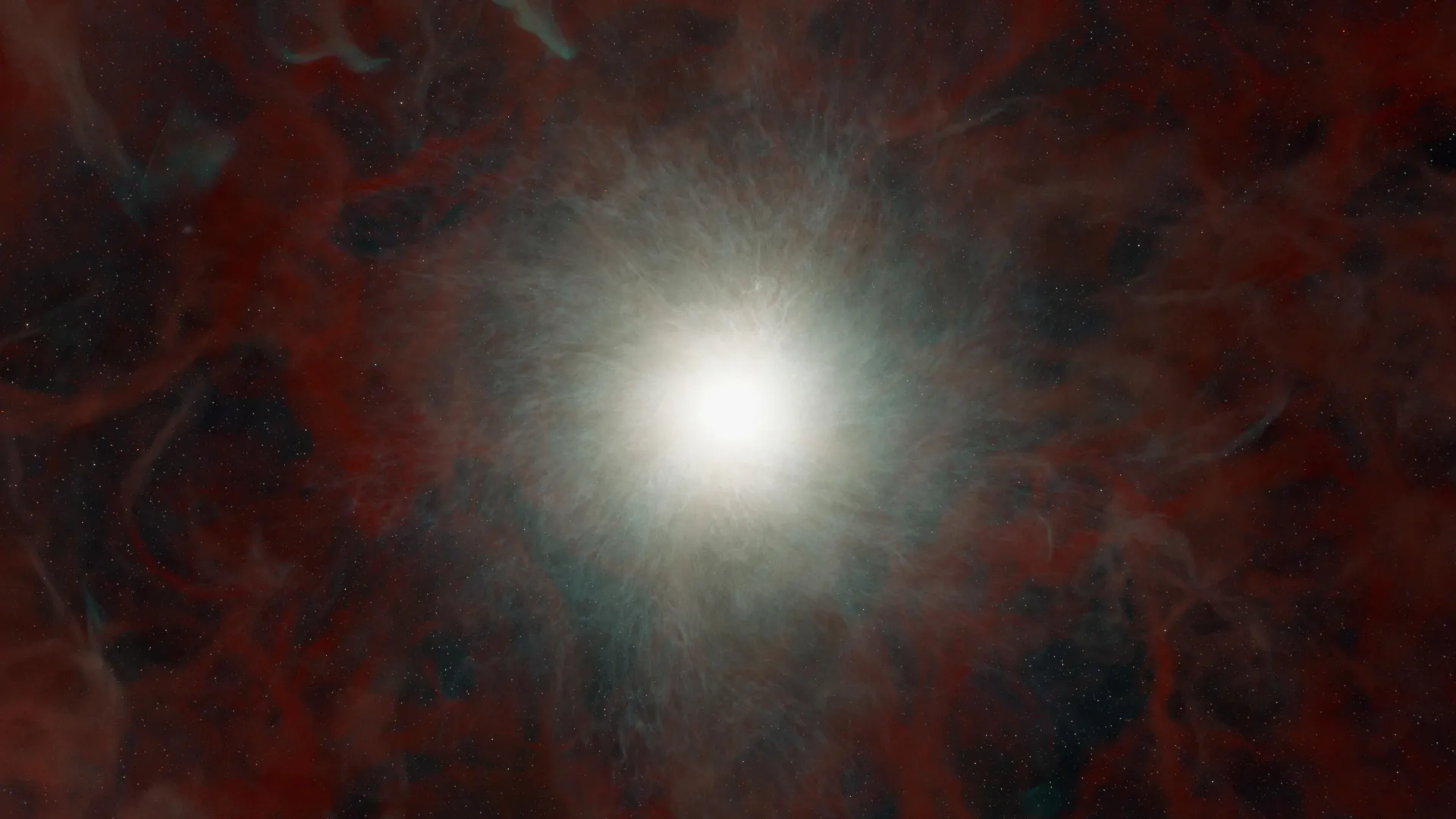 Image: Primary
 Astronomers have directly observed a massive star collapse into a black hole without a supernova explosion. The star, designated M31-2014-DS1, is located in the Andromeda Galaxy about 2.5 million light-years from Earth.
Researchers combined fresh telescope data with more than a decade of archived observations to document the event. The star began brightening in infrared light in 2014 before its brightness dropped sharply in 2016. By 2022 and 2023 the star had nearly vanished in visible and near-infrared wavelengths.
It faded to one ten-thousandth of its former brightness in those bands while remaining detectable in mid-infrared light at roughly one-tenth of its original intensity. The findings were published February 12 in Science.
Lead author Kishalay De, an associate research scientist at the Simons Foundation's Flatiron Institute, said light from dusty debris surrounding the newborn black hole will remain visible for decades. De noted that the star used to be one of the most luminous stars in the Andromeda Galaxy and is now nowhere to be seen.
The observations support models in which convection in the outer layers prevents most material from plunging directly into the black hole. Only about one percent of the star's original outer envelope ultimately feeds the black hole.
Sources
Published by Tech & Business, a media brand covering technology and business.
This story was sourced from ScienceDaily and reviewed by the T&B editorial agent team.
Back to Newswire