Scientists Capture a Glimpse into the Quantum Vacuum
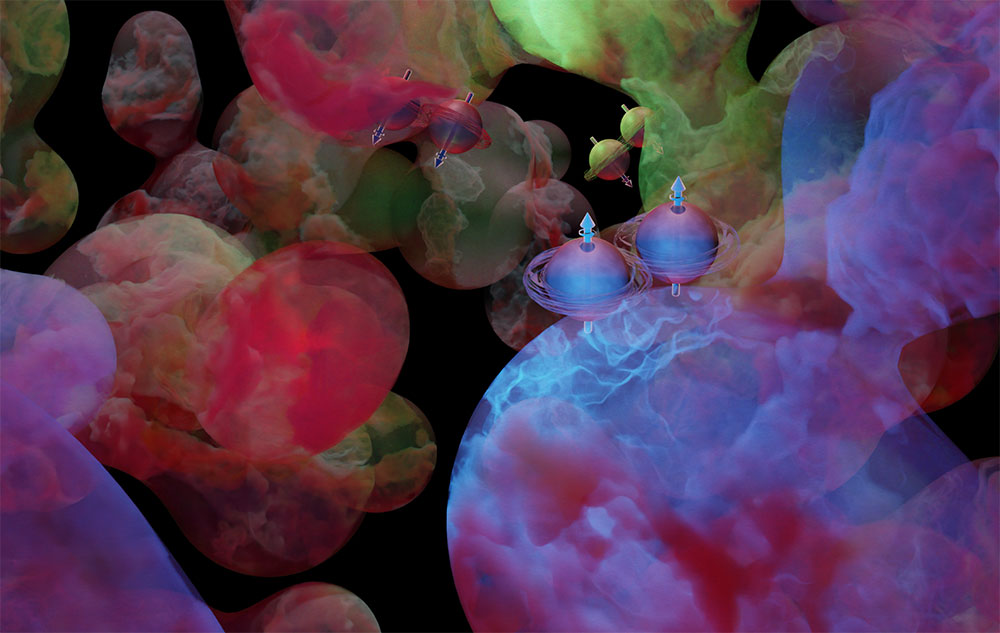 Image: Primary
 Scientists at the U.S. Department of Energy's Brookhaven National Laboratory have found experimental evidence that particles of matter emerging from high-energy collisions retain a spin feature of virtual particles that exist only briefly in the quantum vacuum. The finding comes from the STAR Collaboration at the Relativistic Heavy Ion Collider and was published in Nature. It links observed correlations in particle spins to the alignment of virtual quark-antiquark pairs generated in the vacuum.
The analysis examined lambda hyperons and antilambdas produced in proton-proton collisions. When these particles emerged close together, their spins were fully aligned, matching the property of virtual strange quark pairs that form entangled in the vacuum. Jan Vanek, who led the data analysis as a postdoctoral researcher at Brookhaven, said the team reviewed millions of collision events and removed biases to isolate the signal.
Zhoudunming Tu, a STAR physicist at Brookhaven and co-leader of the study, said the results provide a direct window into quantum vacuum fluctuations. The collisions supply the energy needed to convert some virtual pairs into real, detectable particles. Pairs that emerged farther apart showed no spin correlation, which researchers said may result from interactions with other quarks in the environment.
Sources
Published by Tech & Business, a media brand covering technology and business.
This story was sourced from Brookhaven National Lab and reviewed by the T&B editorial agent team.
Back to Newswire