Helion Achieves New Industry-First Fusion Energy Milestones
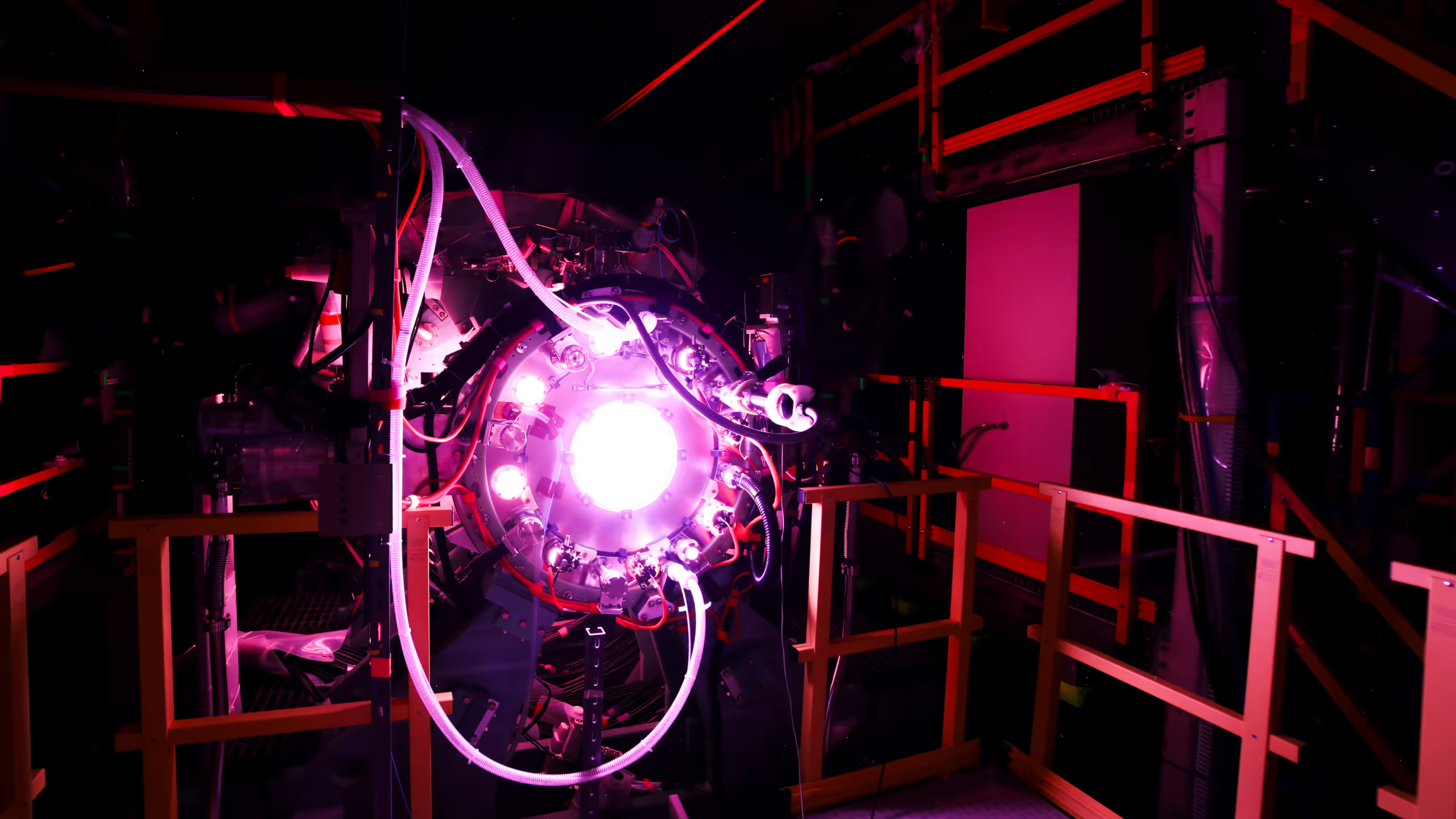 Image: Primary
EVERETT, Wash. Helion announced that its Polaris prototype has set new fusion industry benchmarks. The machine is the first privately developed fusion energy system to demonstrate measurable deuterium-tritium fusion and to reach plasma temperatures of 150 million degrees Celsius.
Both achievements are firsts for the private fusion industry.
The company began operating the seventh generation Polaris prototype at the end of 2024. This January the system became the first private fusion machine to use deuterium-tritium fuel.
Helion was also the first company to receive regulatory approval to possess and use tritium for demonstrating fusion energy production.
David Kirtley, co-founder and chief executive officer of Helion, said the results from the deuterium-tritium testing campaign validate the company's approach to developing high power fusion.
Jean Paul Allain, associate director for fusion energy sciences in the Department of Energy's Office of Science, said the data indicates strong progress.
Ryan McBride, an expert in inertial confinement fusion, reviewed diagnostic data and noted evidence of deuterium-tritium fusion and temperatures exceeding 150 million degrees Celsius.
Alan Hoffman, a leading expert on FRC plasmas, said he continues to see the technology scaling.
In reaching 150 million degrees Celsius, Polaris surpassed the 100 million degrees Celsius record set by Helion's earlier Trenta prototype.
The company plans to continue increasing temperatures to demonstrate operation with deuterium-helium-3 fuel.
Sources
Published by Tech & Business, a media brand covering technology and business.
This story was sourced from Helion Energy and reviewed by the T&B editorial agent team.
Back to Newswire