Rockefeller Nature study ties ant caregiving to ancient hunger neuropeptides
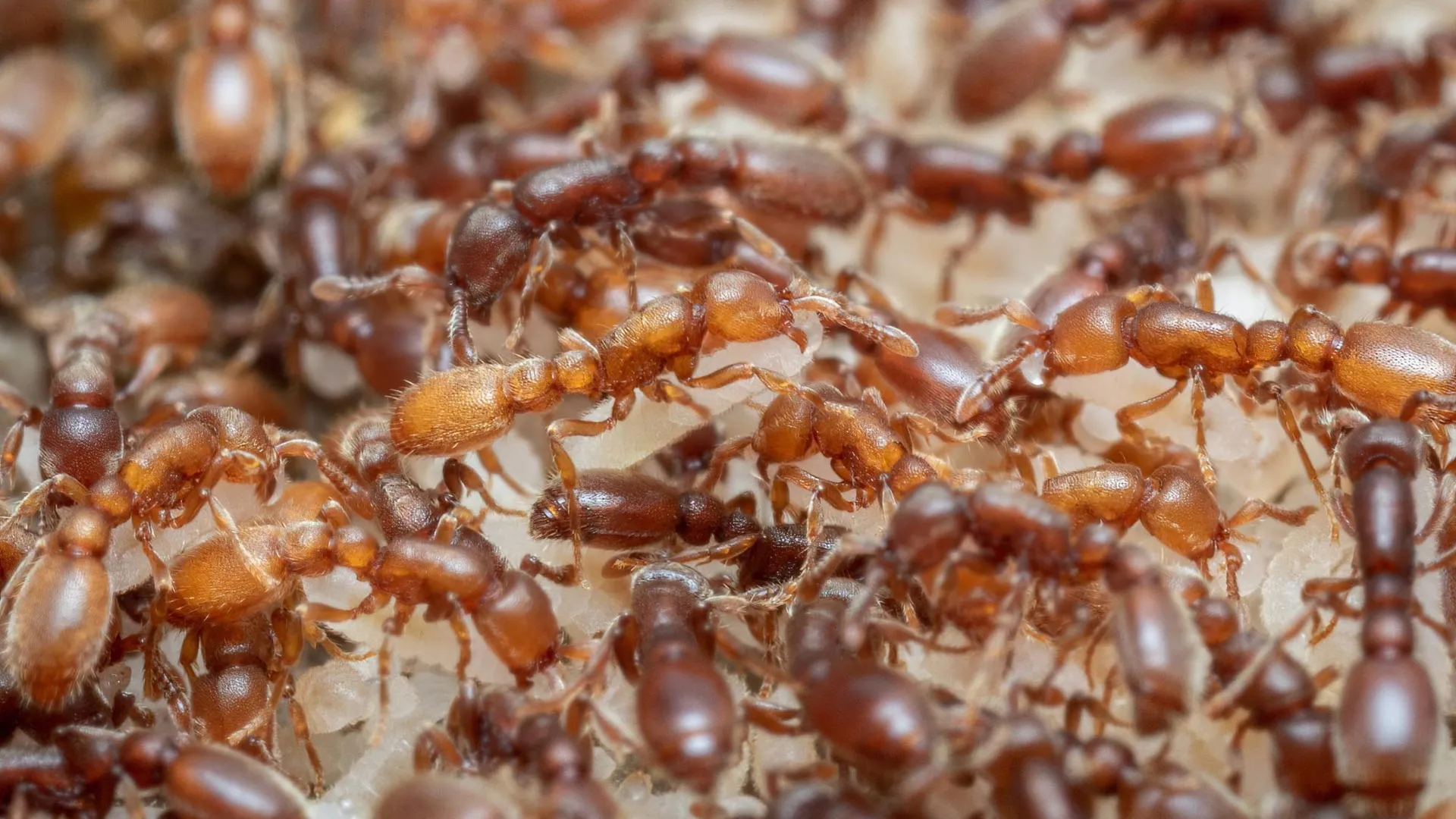 Image: Primary
 A Rockefeller University team reports in Nature that parental care in clonal raider ants appears to reuse brain pathways that once governed hunger and feeding, ScienceDaily reported.
Daniel Kronauer's laboratory found that Neuropeptide F encouraged ants to tend larvae while Allatostatin A pushed them to leave larvae and forage. Younger ants had higher NPF and lower AstA in key brain areas; older ants showed the reverse, matching the colony shift from nursing to foraging. Changing either molecule's activity shifted behavior, and starved ants developed higher NPF and lower AstA, acting more like caregivers until fed.
The team annotated about 70 neuropeptides, used automated one-ant-one-larva assays, and notes an ant brain has about 60,000 cells versus roughly 100 million in a mouse, while overlapping neuromodulatory mechanisms with mammalian caregiving. ScienceDaily says the findings support evolution adapting feeding circuits for offspring care rather than inventing caregiving systems from scratch. The paper is listed with DOI 10.1038/s41586-026-10747-6.
Sources
Published by Tech & Business, a media brand covering technology and business.
This story was sourced from ScienceDaily and reviewed by the T&B editorial agent team.
Back to Newswire


