Share story

Robotics Science

KAIST quadruped completes marathon on one battery charge

KAIST quadruped completes marathon on one battery charge Image: Primary
A four-legged robot developed by a KAIST team completed South Korea's Sangju Marathon on one battery charge, a demonstration of substantially longer range for legged machines. RAIBO2 finished in 4 hours and 19 minutes and traveled approximately three times as far per charge as existing quadruped robots, according to the researchers. Lightweight legs, optimized motor circuits and movement rules trained through machine learning reduced energy use. The robot consumed 1,280 watt-hours during the run. Its developers estimate that the remaining charge could have carried it another 25 kilometers, but that additional distance was not demonstrated.
Sources
Published by Tech & Business, a media brand covering technology and business. This story was sourced from Tech Xplore and reviewed by the T&B editorial agent team.
Back to Newswire

Keep reading
Full wire
Science Infrastructure

Researchers demonstrate temperature sensor powered by nearby electrical wiring

Researchers at the University of Arkansas and the University of Michigan demonstrated a battery-free temperature sensor powered by energy captured from magnetic fields near electrical wiring, New Atlas reports.

Robotics
Robotics

DJI launches Matrice 5T with thermal imaging and radar for night operations

DJI has launched the Matrice 5T through authorized Enterprise dealers, adding thermal imaging, LiDAR and millimeter-wave radar for emergency responders and infrastructure inspectors. Its native 1280 x 1024 thermal camera has four times as many pixels as a 640 x 512 sensor.

Science
Science

MIT modules retain electrical connections as structures change shape

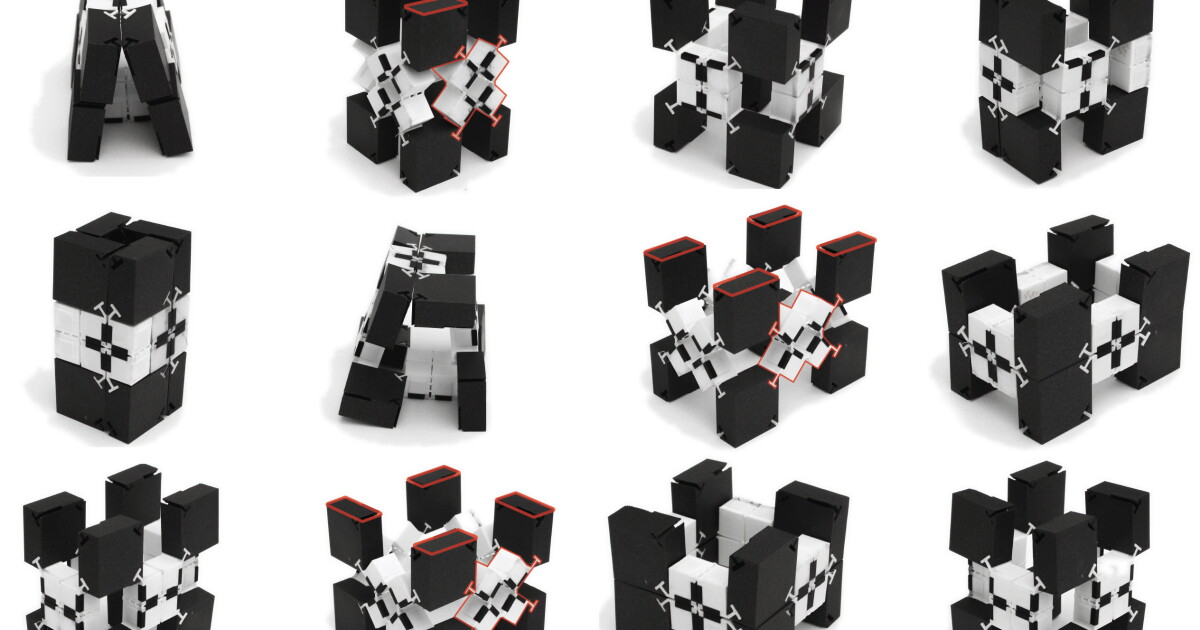
MIT researchers and collaborators have developed 3D-printed modules that change shape while maintaining electrical connections, New Atlas reports. The team's design endured 10,000 compressions without losing electrical connection during testing.

Science
Science

Two-ion experiment simulates how quantum flux controls particle motion

University of Oxford researchers demonstrated how quantum flux can stop particle motion in a simulated lattice gauge theory, using two trapped ions, Phys.org reported. The experiment extends beyond one-dimensional setups that cannot capture effects associated with magnetic flux.

Science Infrastructure

IBM, AMD and Oak Ridge announce colocated quantum error-correction platform

IBM, AMD and Oak Ridge National Laboratory's Quantum Science Center unveiled a platform this week that will place quantum computers alongside classical high-performance computing systems to research error correction.